The Iliad: Propriety and Revenge

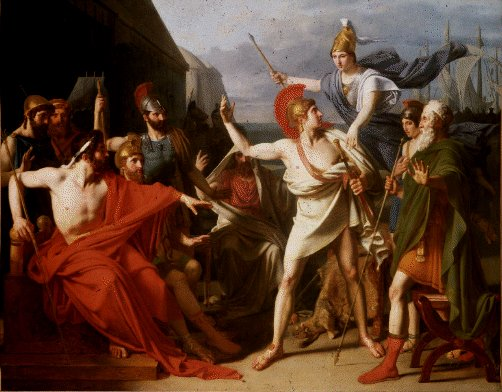
Achilles is an angry man. All of the Greeks (and Trojans) in Homer’s Iliad seem vulnerable to intense bouts of anger, but Achilles loses his cool completely when King Agamemnon takes his captive slave Brisies away. At this point in the story, the Greeks have been in a siege against the city of Troy for months, and while they haven’t broken through the city’s mighty walls yet, all the warriors under King Agamemnon’s leadership have pilfered plenty from the Trojans – gold, animals, women and other slaves, and more. When the god Apollo forces King Agamemnon to return his female captive to her father – one of the god’s own priests – Agamemnon decides to make things right for himself by plucking Achilles’ own Trojan female captive.

Achilles flies into a rage, and refuses to fight for the Greeks. As one of the Greeks best fighters, his absence puts his comrades at a severe disadvantage. Eventually, the Greeks try and return a massive sum of treasures to Achilles to encourage him to fight, but he refuses to accept this. Then, the Trojans kill Achilles’ best friend and comrade, Patroclus. Achilles, hurt more by this than any mistreatment from King Agamemnon, goes on a killing spree, murdering many Trojans, both fighters and innocents alike, including Patroclus’ killer, until the gods themselves must intervene to stop the Greek warrior’s atrocities. Even in a violent world such as Ancient Greece, Achilles, greatest fighter of them all, possesses a threshold for anger and violence that violates propriety and worries even the gods themselves.

Within the text of the epic poem, there are a number of examples of other characters being slighted by their rivals, only to improbably amicable conclusions. Early in the book, for example, two warriors – Greek Diomedes and Trojan Glaucus – duel one another as enemies but bring an end to their fighting in mutual respect. They decide to exchange armor before heading back to their respective camps, akin to players on a football field exchanging their jerseys at the end of a game before heading back to their locker rooms. Somewhat later in the story, after a period of heavy bloodshed, the Trojans offer to pay the Greeks a massive sum – sans their captive, Helen – in order to get the Greeks to leave. The Greeks refuse, but both sides of the conflict agree, at least, to a day-long truce so that each side can properly bury their dead.

A segment toward the end of the poem seems to paint an interesting parallel to Achilles’ outsized violence and uncompromising rage. After Patroclus dies, Achilles plans a funeral for his friend during which he sponsors games of strength and skill. First, Achilles tries to get two Greeks to fight to the death – though the horrified Greek crowd intervenes to end the match before it becomes fatal. In essence, the crowd of Greek onlookers reject Achilles’ violence. Next Achilles also sponsors a chariot race. In this race, the youngest charioteer, Antilochus, controversially uses his own chariot to block an elder charioteer, which causes the elder to place third in the race. Menelaus – the elder – spins into a rage when Antilochus receives the second place prize. The scene looks set for bloodshed when Antilochus apologizes profusely, offering his prize to Menelaus who then – in admiration of the younger man’s honorable accountability – graciously declines the prize.

The interaction between Antilochus and Menelaus seems to contrast sharply with Achilles handling of his own slight. When Achilles’ prize is taken by Agamemnon, Achilles becomes unreasonable and allows his comrades to die fighting the Trojans without his support. Only when Achilles’ own comrade dies does Achilles finally join the fray, and then his bloodlust is nearly unstoppable. Not only does he kill Patroclus’ killer, Hector, but he kills several innocents. Then, he desecrates Hector’s corpse by dragging it on the back of his chariot.

The Greeks look on in concern, and the gods intervene to protect Hector from the dishonor. Eventually, Achilles’ anger softens, when he is made to understand that there are limits to the revenge he can enact, even against the enemy. The world of the Iliad may be a bloody one, where warriors fight to the death, and women and children follow their dead husbands to their graves if they are not lucky enough to be enslaved. But, there are limits to the cruelty that one may be permitted to exact on one’s enemies, difficult though they may be to see. And furthermore, there are moments of humaneness in the Iliad, where characters are celebrated for choosing peace and brotherhood over bloodshed. This ability to overcome one’s own base instincts is demonstrated by men inferior to Achilles, and yet Achilles can not overcome his own not able to overcome his own bottomless wrath until the very end of the epic poem. Thus, even in a world permissive of extreme violence, Achilles stands as a warning against anger and violence taken without limit.

How to Reach Your Goals, Even When it’s Frustrating

As adults with full-time responsibilities, learning can be hard. The inefficient 10 hour days at the library or long gym sessions that may have gotten us through our youths are no longer options for us, and it feels like there’s never enough time to learn anything new or do anything well. But, we can help ourselves out by adjusting our approach to learning and our expectations for ourselves. Personally, since starting my family, I’ve found it difficult to find the time to cultivate new skills or explore new passions. But, in the past 5 years, I’ve managed to achieve at least some of my goals, such as learning a new language and transitioning into a new career. Here are a few things I’ve learned along the way:

Focus on Process, not Product

In today’s world, we tend to be very “results oriented”. Unfortunately, reaching goals takes time. Making a New Year’s resolution or sharing a goal with friends (“I’m going to learn Chinese!”) may make you feel good and give you a little bit of a dopamine boost when your friends and family predictably congratulate you on undertaking such a positive effort, but unfortunately real learning is more difficult to quantify than our world of convenient milestones and personal plans would like. 6 months into studying a new language, or learning computer programming, and you will likely not have much more to show for yourself than when you began. That dopamine rush will be long gone, and you will suddenly feel embarrassed to bring your new initiative up to family and friends again.

But here’s the thing – learning takes time, and that’s OK. Learning is not about generating quick results, but rather, learning is about committing to a process that eventually leads to personal transformation. When it comes to learning something new, I wouldn’t bother setting goals that revolve around results. Instead, I’d set a goal around committing to a certain process. “I’ll jog for 30 minutes three times per week” is better than “I’ll complete my first marathon by March.” “I’ll make a deliberate effort to study Japanese for 20 minutes per day, every night after dinner” is better than “I’ll pass the first level Japanese Language Proficiency Test by the end of the year”.

Beware of Habit Trackers

I really dislike a lot of the popular online habit trackers that provide users with data analytics around their various goals and other hobbies. Why? Well, because unless we know why we want to see this data, it’s only bound to confuse us. Sites like StoryGraph and their ilk can be fun, but at the end of the day, we need to be deliberate about our goals and what it means to achieve them. Should anyone burden themselves with the goal of “reading more”? I don’t think so. I love to read, but quality reading is more important than quantity. A goal to read Anna Karenina is probably more worthwhile than a goal to read 501 trashy romance novels in 2025, an “improvement” over a mere 500 in 2024. I guess my point here is, if we are going to track our habits, we should have some kind of plan in response to the results we see. On a related note: aggressively time-tracking for a week or three can be a good way to learn where your time is going, but keeping up with it can become a burden all its own. If you’ve learned that there’s something you really want to track – for example, hours of exercise per week, or time spend doing math problems – fine, track that. Don’t track everything. It’s just not worth it to be so stressed out over all of your time. To bring it back to StoryGraph – maybe I do read too many crappy novels, but if that’s how I relax, and I’m still working towards my goals, who cares? What’s the point of quantifying this data?

Be Reasonable and Acknowledge Limits

I truly believe that we can have everything that we want, within reason. This is where it helps to have done some soul searching, and to not let your goals become objects of ego. Instead, be as sure as possible about what things you want to achieve. As an adult with a full range of responsibilities, you might be able to take a music lesson or pass a science class, but you’re not going to do both while also staying fit and becoming a grand master at chess – and there’s no reason to feel bad about this! Imagine how unfair it would be to all the people who are great at something if you were such a gifted and talented person that you could just be as good as they are at said thing while juggling 5 other spinning plates. Unfortunately, as much as we’d all like to believe that we could be jack-of-all-trades who are perhaps masters at some, that’s not how the real world works, and surely, it’d be pretty boring to do anything if it were really that easy. When thinking about getting serious about learning something new or achieving a new goal, ask yourself: “Why am I doing this? Am I really interested in it, or is it just about my ego?”

Learning gets harder as we get older, but it can also be fun without adding unnecessary pressure to our lives. By being honest about our limits, not getting caught up in out-of-the-box solutions, and emphasizing the learning process over results-oriented goal-setting, we too can enjoy learning and the enrichment in brings to our lives.

When the Amount of Video Game is “Just Right”

Video games are getting too big. It’s a familiar refrain I keep hearing from friends of mine, regardless of what else they’ve got going on in their lives. Some of those who say this are people like myself – parents who might play a game for 30-60 minutes at the end of a long day. Others are simply people who have more than one hobby, and have found that keeping up with the year’s slate of major video game releases leaves time for little else. And then there are people who have gaming as exclusive hobby, and still, even they don’t even have time to play all of the things they’d like to.

I love adventure games and RPGs, but looking over the year’s calendar of releases, it’s easy to see the problem. It would just be impossible to play everything that I’d want to, despite how poorly-regulated as my gaming habit tends to be. After all, almost every game has 100 hours of content, and next year there will be even more games out competing for my attention.

It’s hard to believe that, once upon a time, games weren’t so focused on being so addictive. Take Link’s Awakening, which I just finished on my Analogue Pocket: 8 main Dungeons, which probably take an experienced player 30-40 minutes to complete, and a few side quests. Overall, I finished the game in less than 14 hours, and mostly played it in 20-30 minute bursts that easily fit into my schedule.

That’s one of the things I miss the most about retro games, and why I still like playing them so much. Games like Link’s Awakening and Final Fantasy Adventure, which I played earlier in the year, feel more like creative projects – endeavors to craft a memorable but finite experience for players who craved innovation and novelty. Far from being like today’s massive life-replacement experiences, I found something touching and true in Link’s Awakening allegory-like narrative.

“This is all a dream,” Link’s Awakening tells the player. “We’ve poured our best ideas into it, and hope you love it.

“But really, player, it’s a dream. And out there is your life. And you should want to wake up”.

Gaming Microblog #009: Yakuza Kiwami (2016)

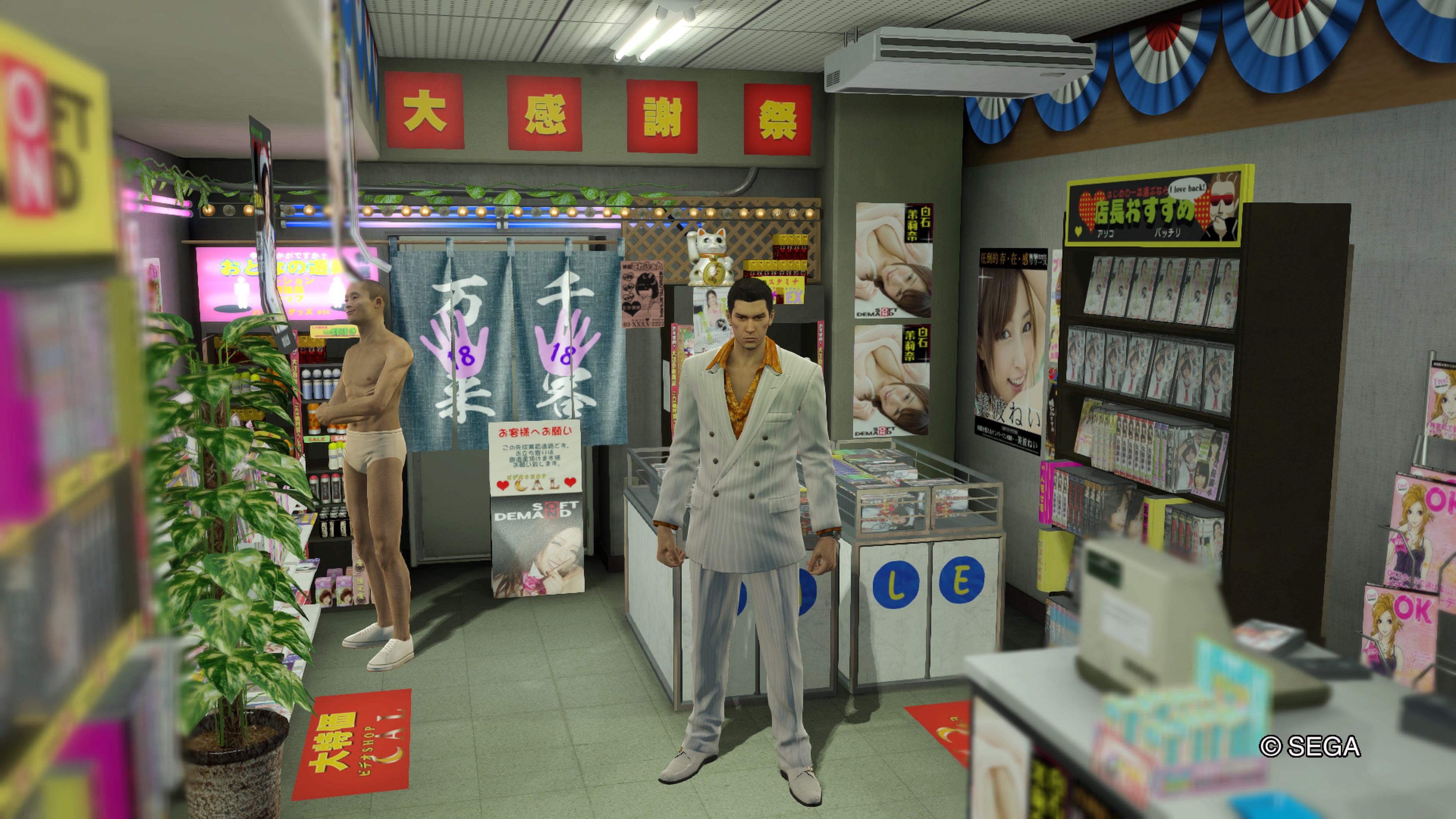
Although Kiwami presumably comes with a slathering of new features and story content not present in the original Playstation 2 game, it still feels like a more focused effort than its predecessor, Yakuza 0, which, in retrospect, it starting to look like the triple-disc “Greatest Hits” entry of the series. Initially, I felt somewhat let down by what seemed like a parsed-back Y0 “DLC”, but by the end, I found that I actually preferred Kiwami for its narrower scope and more limited range of features. Still, nothing less than a full game, with RPG-style cinematic storytelling quasi-RPG systems worth investing in.


Yakuza Kiwami

Playstation 4 (Via Playstation 5 Compatibility)

Dates Played: 7/12/2024 – 8/20/2024

Playtime: 27 Hours

Gaming Microblog #008: Final Fantasy 7: Rebirth (2024)

SPOILERS BELOW


There’s one segment of Final Fantasy VII: Rebirth’s many ending scenes that has stuck with me, months after finishing the game. The scene takes place in an alternate reality Midgar, where the lifestream has dried up and the planet has died. Here, Cloud has just awakened from a coma, and has gone on an impromptu date with Aerith in the Sector 5 slums, hoping to have a nice time in the last days of the crumbling world. 

Unfortunately, Cloud and Aerith’s date turns out to be a pretty bad one. First, Cloud tries to buy Aerith a piece of jewelry, but whichever one he picks turns out to not be for sale. Later, Cloud and Aerith encounter a street vendor who offers them a host of candies to choose from, but no matter which of the colorfully packaged treats they select, the vendor guilts them into trying her own experimental homemade candies instead. The candies aren’t very good. Finally, Cloud and Aerith encounter a street photographer who is taking photographs of couples on the street. Unfortunately, he has only one shot remaining on his last roll of film, and decides to take another couple’s picture instead.

This scene really resonated with me because, as Sinatra sang, “that’s life”. And the resignation here underscores a lot of life’s disappointments that we all experience day to day, even when things we are supposed to enjoy end up not being very fun. But also, I feel like this scene might aptly describe Square Enix Creative Business Unit I’s feelings about their own work: in Rebirth, they’ve prepared a buffet of options for fans, but not matter how many of their wares they unpack and place on the table, their own game must be a singular experience that will likely not meet everyone’s, or even anyone’s, lofty expectations. They’ve offered their absolute best work, and now it’s up to the players to have a positive experience for themselves by not letting the negatives define their experience. “That’s life!”


Final Fantasy VII: Rebirth

Playstation 5

Dates Played: 2/29/2024 – 6/26/2024

Playtime: 88 hours

Gaming Microblog #007: Animal Well (2024)

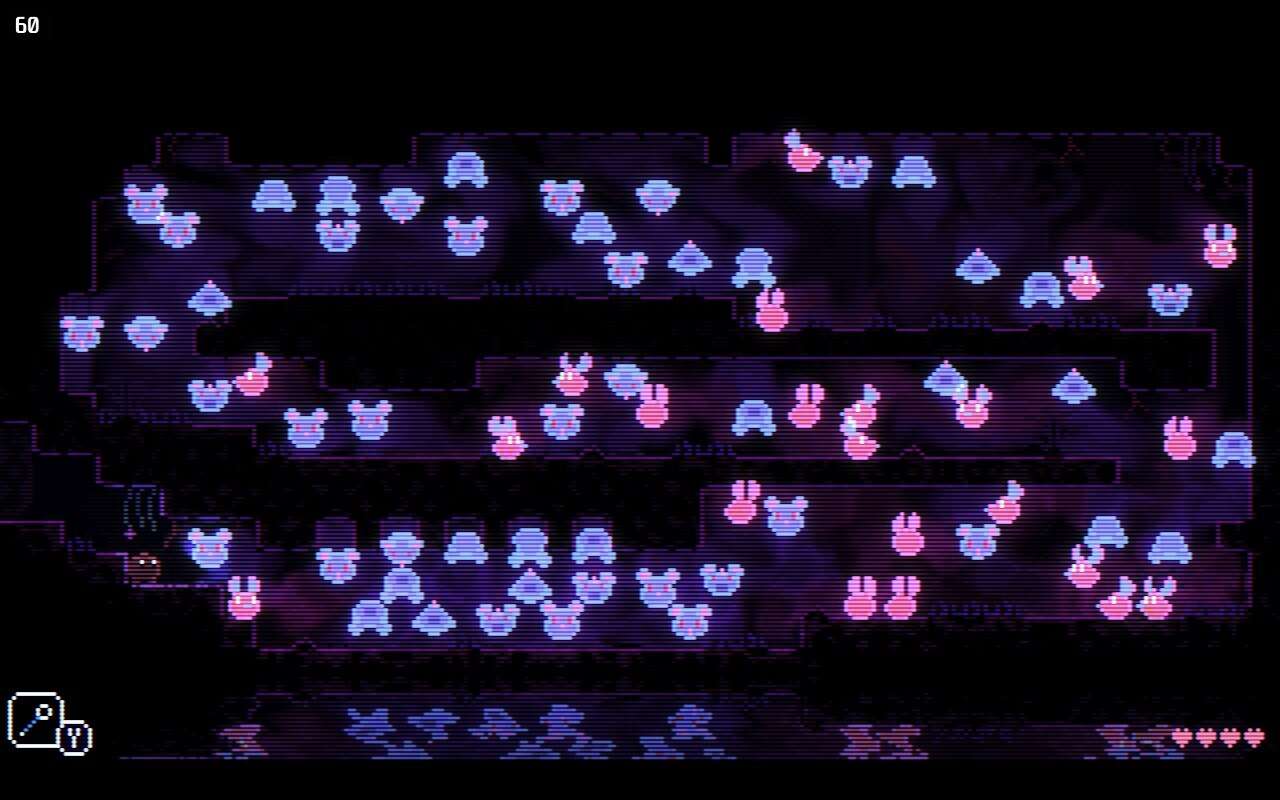
I always imagined I’d have a great time playing the search-action puzzler Animal Well, but what I did not realize was how much fun I’d have exploring the game with my son, who was just as captivated by the game’s obtuse puzzles and driven be curiosity as to what we’d find in the next room. I’m sure we’ll spend many more hours after the initial credit roll uncovering many of Animal Well’s hidden secret. .


Animal Well

Steam – Steam Deck

Dates Played: 5/9/2024 – 5/18/2024

Playtime: 10:15 hours

Gaming Microblog #006: Trails in the Sky FC (2004)

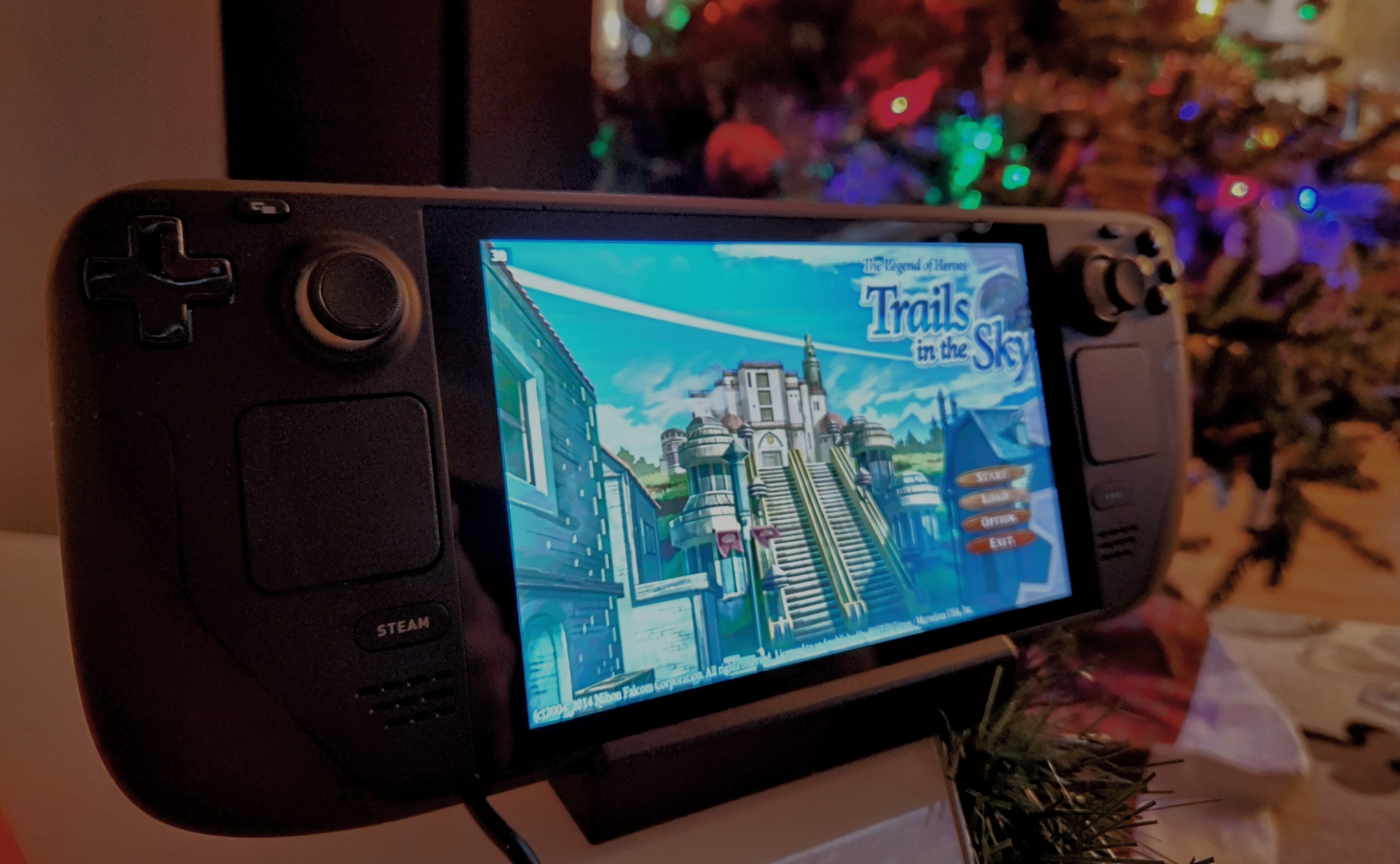
I’ll admit – I had some reservations about this one. But it really won me over in the end. Equals parts JRPG and Visual Novel, I wouldn’t consider the first Trails for everyone. But for those who don’t mind lots of reading and the occasional anime trope, Trails in the Sky FC will delight with its lovable, down-to-Earth cast, and an elaborate fantasy plot, which is delivered in a simmery, slow-burning way that allowed me to bask in the emotional side of the characters and their various conflicts.

As the credits rolled, I found my self asking if tomorrow was “too soon” to start SC. And I might just go ahead and play that next!


Trails in the Sky FC

Steam – Steam Deck

Dates Played: 12/29/2023 – 5/1/2024

Playtime: 48.9 Hours

Gaming Microblog #005: Final Fantasy Adventure (Seiken Densetsu: Final Fantasy Gaiden) (1991)

I vaguely remembered this game from my the collection of my first grade best friend.

It was, probably in his words, “weird” and “not good” compared to, say, Link’s Awakening. I never thought to bother with it.

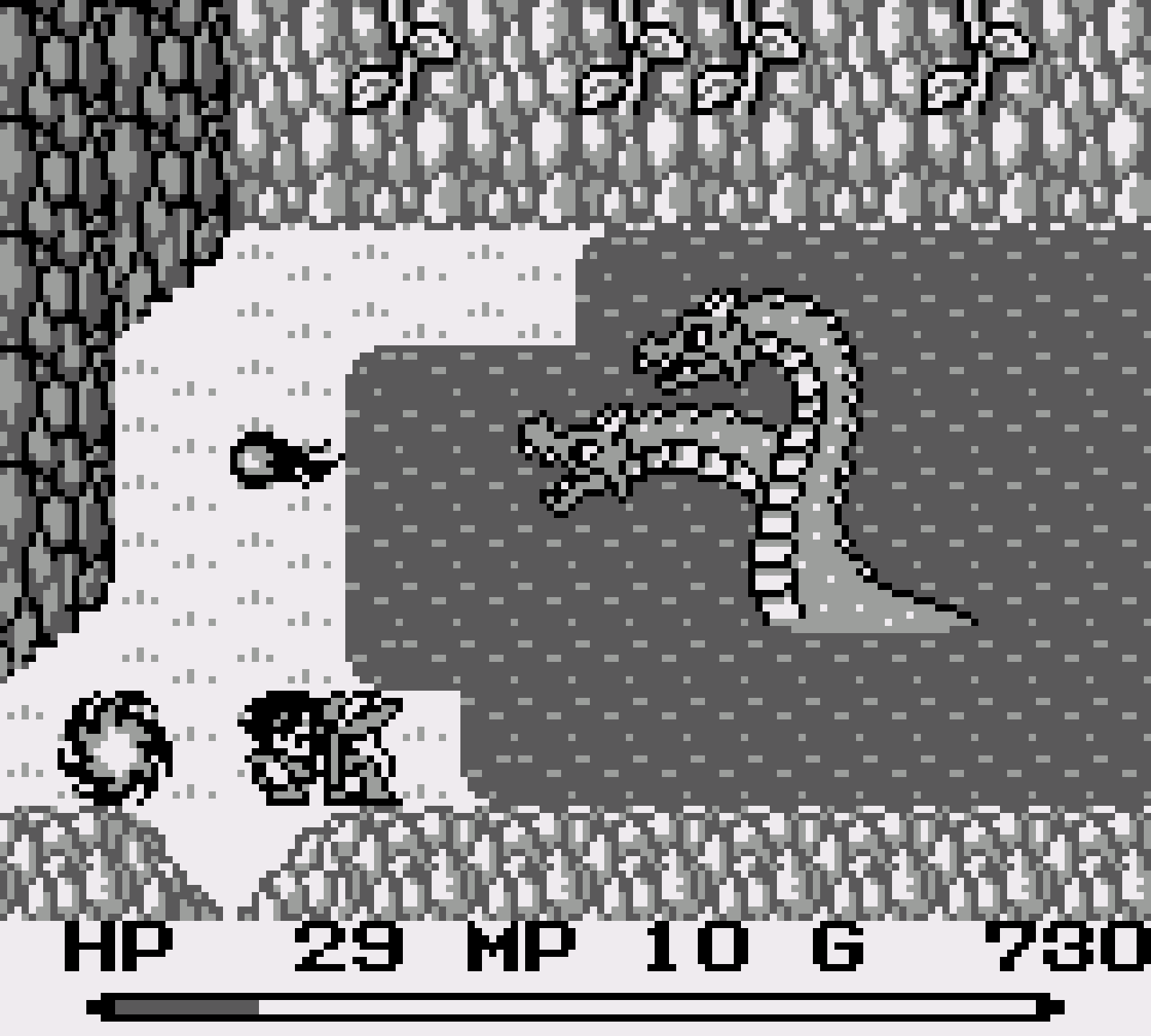
Well, sure. It’s several steps lower than that game. But, Final Fantasy Gaiden is actually a full-scale action RPG adventure on the Gameboy that is contemporaneously as good as an attempt at an action RPG as Square have ever done, as far as I’m concerned.

I’m glad I gave came around to it, and owe my interest to the imminent release of Visions of Mana. But first, I might have to go ahead an play Secret of Mana on the SNES – something I’m eager as ever to do, after finishing the GameBoy original.


Final Fantasy Adventure

Gameboy – Analog Pocket openFGPA

Dates Played: 2/27/24 – 4/21/24

Playtime: 20ish Hours

Gaming Microblog #004: Yakuza 0 (2015)

Finally, I played the endlessly praised Yakuza 0.

I understood why the game is beloved in a certain sphere of Japanophile immediately. It takes you back to the time and place that maybe every 90s anime fan wanted to visit – 80s Kabukicho.

I feel in love with the vibe immediately. Then came the random battles, the fighting system, the half-baked management games… halfway through, I’d almost had enough.

I’m glad I stuck with it. Though it had its ups and downs, the final sequence was really exceptional, hitting on the film-like levels that the game occasionally aspired toward.

I’ll be back!


Yakuza 0

Playstation 5, Digital Copy 

Dates Played: September 2023(?) – 2/27/24

Playtime: 36.5 Hours

Gaming Microblog #003: Cyberpunk 2077 (2.1) (2023)

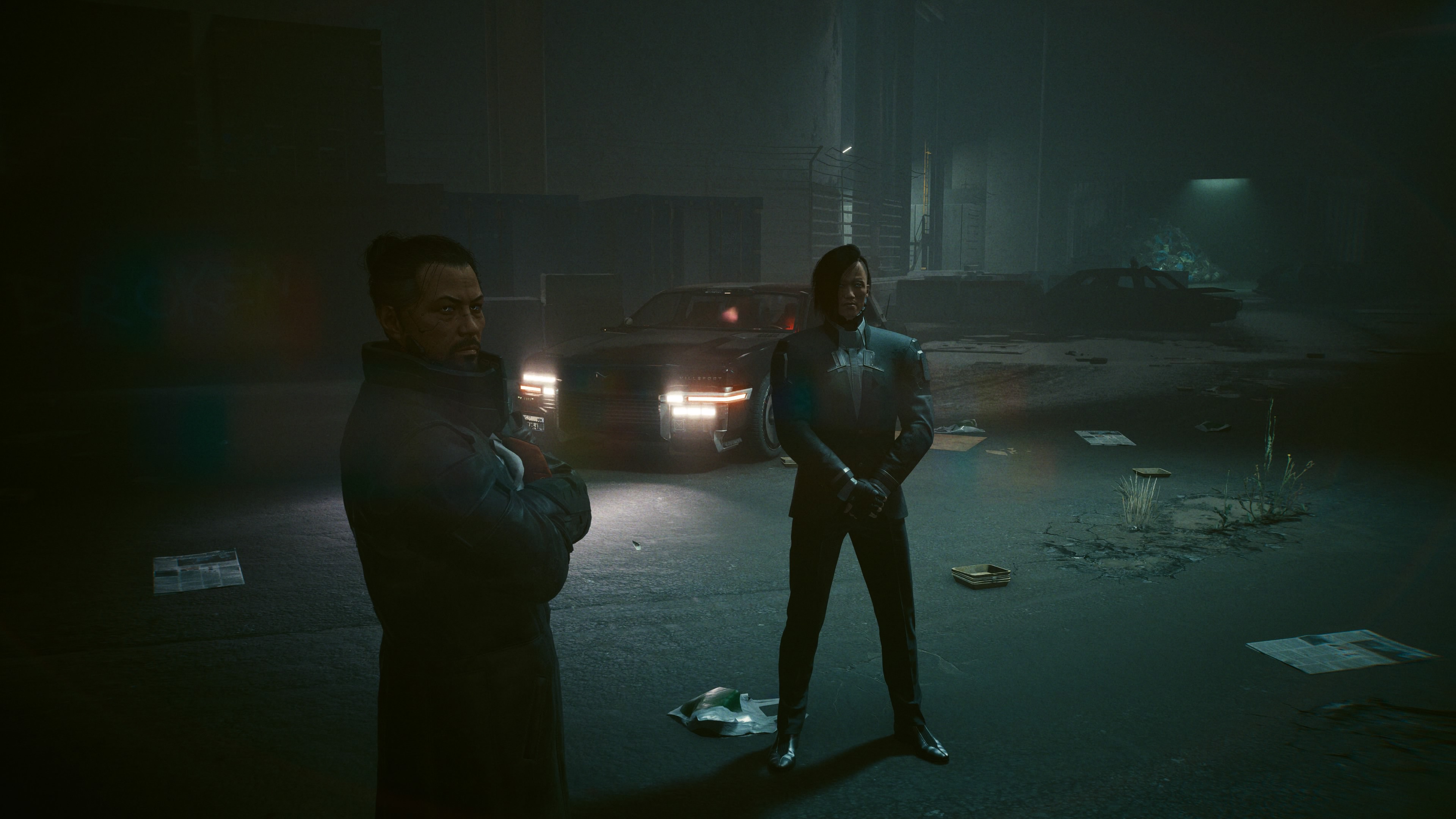
This might be a true beautiful, ambitious disaster.

I’d logged around 15 hours into the 1.0, back when it was released. It was not good.

3 years of updates later, I found it not only to be way more playable, but also surprisingly immersive and engaging.

Provocative, thoughtful, relevant, cool

I’ll be back for Phantom Liberty…

.


Cyberpunk 2077 (2.1)

Playstation 5, Digital Copy

Dates Played: 12/22/23 – 1/17/24

Playtime: 26.5 Hours