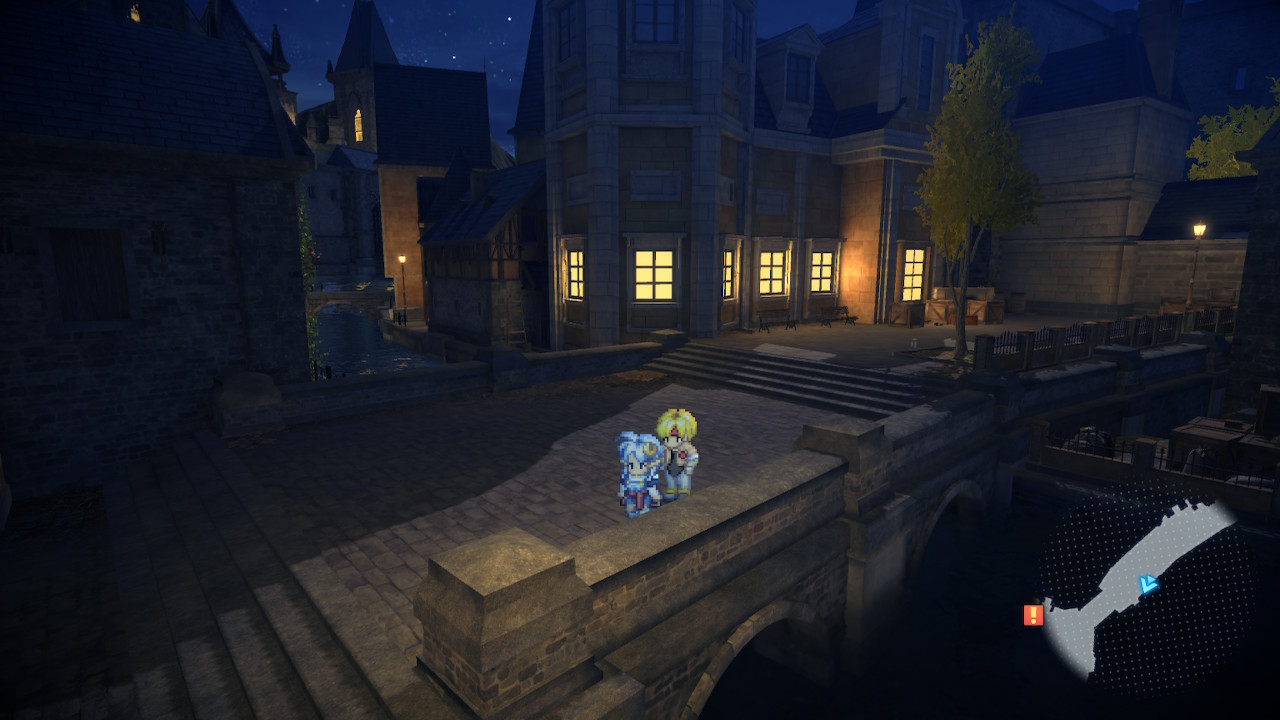
Down Time: I Finally Got My Official Steam Deck Dock to Work, Because My Scrawny Forearms Got Too Tired of Holding the Steam Deck

For several years, I’ve been telling myself that I’d get around to playing The Legend of Heroes: Trails in the Sky. As a JRPG-lover like myself, the Trails series has been an embarrassing blindspot that I’ve meant to rectify time and time again. But, opportunities would come and go, and I would just keep finding excuses to not start the game.

When I finally secured a Steam Deck pre-order back in mid-2022, I told myself “now’s the time”. Trails in the Sky would be the first game I played on my new console. Tragically, though, Trails in the Sky has a status of “incompatible” on the Steam store’s compatibility page. I did some research, and I found pages of comments on Steam, reddit, and even from the developer themselves reassuring me that, with one minor caveat (an anime cutscene intro does not work), the game was perfectly playable on Steam Deck.

For some reason, I did not start the game.

I gave into the hype and played Tunic instead. Then I played Unsighted. Then I dicked around with American Truck Simulator and Final Fantasy XIV. Then I played Pentiment. Then I broke up with my Steam Deck (I’ll explain that in a minute) and went back to playing my Switch, apparently for a whopping 347 hours in 2023. It was starting to look like I would never find a reason for the Falcom RPG to be elevated to my “now playing status”.

You can’t play The Legend of Heroes: Trails in the Sky on Switch, but if you could, maybe I’d have gotten around to it sooner. People make fun of the Switch in 2023, but it’s still a perfectly good console that runs most games I’d like to play to an acceptable standard. When the Steam Deck came out, a lot of people talked about it like it was a “Switch-killer”, and I certainly thought my Switch would be decommissioned after my first few sessions with the sexier Valve device, but the Steam Deck (still) has two main drawbacks, at least as far as I’m concerned:

  1. It’s Heavy as Shit
  2. The Official Dock Sucks

As it happens, I’d wanted to use the Steam Deck as both a portable and a living room device at one point, but I just kept running into problems. The biggest one of these was that the Dock just seemed to hate my TV. Its display would shutter and blink constantly, and sometimes it would not display at all.

I worked the problem for an hour or so, but eventually, I gave up after a rare “gaming date night” with my wife turned into a night of her sipping wine on the couch, scrolling her phone and watching me as a sat on the floor troubleshooting. Instead, we decided to play a game on the Switch, because the Switch just works. Our evening was salvaged, and my Steam Deck was ushered off to an empty drawer where its battery gracelessly drained completely over the next 9 days.

No harm, no foul. I had a great year playing my JRPGs on my Switch. I sunk about 80 hours into Octopath Traveller II, many of those hours in the console’s portable mode whilst on a train or in the work cafeteria, but also via longer sessions docked to the TV (and sound system) on weekend nights (the Octopath Traveller 2 audio and soundtrack is glorious, by the way, especially hearing it come through a real set of speakers). I played Final Fantasy Pixel Remaster, Dragon Quest, and Phantasy Star much the same way. Then I played Super Mario RPG (2023) and fell into a hole. It was such a special experience for me that I wanted my next game to be something that could be just a special. I thought again about Trails in the Sky, a game beloved by many, just sitting installed on my Steam Deck for over a year now. I thought “now’s the time”.

With great trepidation, I plugged my comatose Steam Deck into its Official Steam Deck Charger, and prepared myself for my next great video game experience. Later that night, I made myself a cup of chamomile tea, and sat down on the couch with the Deck. It was time to finally play The Legend of Heroes: Trails in the Sky.

I played it for an hour or two, and then put the game down. It felt slow, with lots of inconsequential writing. Over the next several nights, I kept going, knowing that many good RPGs take time to get going, and armed with the knowledge that many before me had made it through this common complaint regarding this particular game and its subsequent entries. Around 8 hours in, the magic of the game was starting to work on me. I was starting to care about the characters, and the world around them. I was becoming invested in what would happen next.

Unfortunately, after a week of daily Steam Deck sessions, my wrists were also starting to strain under the device’s immense weight.

I tried propping the Deck up with a lap pillow, but it only worked so well. It was then that I knew that, if I wanted to keep playing The Legend of Heroes, I’d have to once again see if I could get the Dock to work.

Long story short, my Steam Deck dock wasn’t outputting to a display that my TV liked, so once I manually changed the display to something I knew my TV could handle, it was relatively smooth sailing. Pretty weird that I had to do that, and I wish I’d have thought of it back months ago as my date gaming night was slowly melting away, but whatever. No harm, no foul.

Now, life is good. I’m relaxing on the coach on a Friday night, playing The Legend of Heroes on a 55″ flatscreen, and I’m finally getting some good use out of my 8bitdo Pro 2. I’ve got a lot of Trails left to play – more than enough to get me through the holidays, and then some – but truly, now that I’ve figured out this docking situation, the “sky” is the limit. I’m living the dream, something close to the exact ideal circumstances that any gamer with a real affection and interest in old video games hopes to find themselves in one day.

Next up, maybe I’ll figure out how to get that emulator audio to stop crackling.

Less was More when it came to Super Mario RPG’s Limited Dialogue and Silent Protagonist

Image Source: Nintendo.com

Spoiler-Alert.

Geno “dies” at the end of Super Mario RPG.

OK, maybe “dies” is a strong word. Geno, a wooden puppet who becomes animated and joins the party at an early stage, only ever gains sentience because a “higher power” sends him to aide the Mushroom Kingdom in its quest to retrieve the Seven Stars and save Star Road. When the game’s titular quest is fulfilled by the heroes, Geno’s soul simply rises up from his body and returns to the cosmos, reverting “Geno” back to his original form of a puppet.

There’s not a ton of dialogue in Super Mario RPG fleshing out Geno’s self-sacrifice. We are never treated to much melodrama exploring how anyone else from party feels about it. We can assume Mario and the crew liked having Geno around, just as we can assume that Geno enjoyed the time he spent in his corpeal form. When, in the game’s final moments, Geno’s “soul” is seen rising from his body and ascending up over the top border of the frame, we haven’t been told how we’re supposed to feel about it. Mallow – Mario’s cloud sidekick – simply says something like “when we do this, you’ll -“, and Geno and the rest nod along in understanding.


Since the 90s, most role playing games feature what is often described as “way too much talking”. But during the SNES-era and prior, it wasn’t like this. Prior to, perhaps, Final Fantasy IV, video game narratives were not always so hand-delivered to the player, and the RPG faithful had to sometimes use their own imaginations if they wanted more detail around the characters they were controlling and the story in which they were taking part. That is one reason why fan-fiction and video game novelizations became popular online during the 90s. The games sparked the imaginations of the players, who in turn felt compelled to answer questions from their own minds to their own satisfaction.

Games today, with their full voice acting and 100s of hours of content, rarely are willing to leave so much to the player’s imagination. Take Octopath Traveller II, which came out this year, as an example. While I loved the game and the absorbent amount of time I spent with it, I was taken aback by the sheer volume of writing contained in a game that was stylized as a retro JRPG. At no point in Octopath Traveller II is the player spared any detail about what a main protagonist could be thinking or feeling, and I’ll fully admit that, somewhere around 30-40s hours in, I was sick enough of reading what some characters had to say that I’d simply starting skipping a lot of it.

Or take another game I loved, Horizon Forbidden West, as an example: that game features both fantastic writing and world building, to be sure. But the amount of talking that Aloy does is often cited as a criticism, and for good reason. When I am made subject to Aloy’s every passing thought, how I am then expected to ever feel like Aloy’s thoughts are really my own thoughts, or that her struggle is my struggle?

One might say that we’ve got it too good these days, and as a result, the relationship between player and game has changed to something that is undeniably more passive, even as game developers strive to make gaming more immersive.


I probably won’t remember what Super Mario RPG was about, but I’ll always remember how it made me feel.

Specifically, I’ll remember how it made me feel because of stuff near the end involving Geno. Sitting from the sofa, I can’t really say I know how Geno felt about leaving Mario and his friends. I don’t know what it was like for Geno to be alive, for however short of a time that it was.

As the credits rolled, we’re shown an image of Geno reverted back to his puppet form, once again being played with by a child in their room. Over the collage of bright graphics and catchy music, I catch my thoughts drifting to the meaning of life itself: in particular, what it means to be alive, and to have relationships, no matter how transient both may ultimately be. Honestly, it’s hard to imagine a modern production with a large budget giving me so much space to grapple with my own thoughts and feelings. I imagine that giving a player space to sort out their own thoughts carries a certain risk.

What I do know is that I was grateful to get to know Geno just as I was delighted to spend a dozen or so hours with the Mario gang. The credits are rolling now, and the Yoko Shimomura soundtrack is starting to hit. I feel like I’m back on the school bus, looking out the window at my imaginary friend, Mario. And dang it – I’m welling up.

Respecting the Past: Star Ocean: The Second Story R

I grew up on meaty PS1 RPGs like Star Ocean: The Second Story. In fact, I think I played that one in particular at least twice. So, it was a foregone conclusion that, when Nintendo dropped the trailer for the game’s remake in a Nintendo Direct earlier this year, someone knew they had me in the crosshairs of a homing missile.

We get a lot of remakes these days, but they’re often modernized as-if to say “here you go, we’ve brought this game up to the present.” Second Story R, too, is more of a remake than a simple remaster, but its reverence to the past strikes as pretty singular – it’s more pixel remaster than port, unwilling to leave any nostalgia dollars on the table in the exchange for convincing younger players that it isn’t old.

I admire the detail that has been taken in recreating the classic Star Ocean entry to make it look and feel – if not function – like the 1998 from our best memories. But, along the way, I’ve also found the retooled version of the game to be uncanny.

I’m about 20 hours into the game, and I am tearing through it with the quickness and efficiency of an NFL quarterback dissecting an underachieving defense. Is this because I beat the game twice – probably – over 10 years ago? Maybe, but the more likely thing is that the game has been subtly redeveloped and designed in ways to polish off all of those rough edges that might have once made it a more deliberate commitment.

Private actions (the game’s primary relationship and side quest vehicle) are now displayed in menu of things you might want to do. Fast travel gets you to them in moments. There are more subtle tweaks that speak to rebalancing, also: I’m overlevelled despite not grinding at all, and have more Skill Points and Battle Points (for leveling up my various abilities) than I know what to do with. Star Ocean: The Second Story was never a difficult game to break, and the remake makes it even easier.

“Was it always this easy?” and “was I always this good?” are some of the thoughts that have run through my head as I careen over the section of the game that once required exchanging the games physical discs. Star Ocean: The Second Story will always have a cherished place in my memory – a place, for better or worse, feels more jeopardized the longer I commit to this beautiful recreation. As Bob Dylan once wisely sang, “You can come back, but you can’t come back all the way.”

The Great JRPG Project: Exploring the DNA of my Favorite Video Game Genre

Since my teens, I’ve considered myself a JRPG fan more than anything. Now, I’m finally going back to see what stuff my favorite video game genre is really made of.

The earliest Final Fantasy game I’ve ever played was IV, and that was the version of it that appeared in the Playstation “Final Fantasy Chronicles” collection. While I’d bought that collection primarily for Chrono Trigger (my older, wiser cousin had sworn it was the best thing ever), I’d always known that I wanted to eventually go back and play the older Final Fantasy games. Having played titles such as VII and X to completion, I already knew that I was a “fan” of the Final Fantasy series. It would just be a matter of catch-up.

Growing up, I never had Nintendo consoles. My parents were staunchly anti-video game, until finally one Christmas they surprised my brother and I with a Playstation. But even as I tore through games like Final Fantasy VII, Star Ocean II, Xenogears, and several others, the voices calling from the genre’s heyday on the SNES and Genesis rang loud. Rather than seek out an older console that I never had the chance to play, I turned to ports – Final Fantasy IV and Chrono Trigger in the Final Fantasy “Chronicles” Collection, Final Fantasy V and VI in the “Anthology” counterpart, and Final Fantasies I and II in the “Origins” bundle.

Unfortunately, other than Final Fantasy IV, which I loved (anachronistic PS disc loading times and all), I never got around to playing many of these games, though I purchased them all. I blame the release of the PS2, which would soon find its way into my bedroom, bringing titles like Xenosaga, Star Ocean 3, Final Fantasy X, Wild Arms 3, and many others with it. And then, forget about RPGs, there were also games like Snake Eater to be played.

Time marched on, and when my PS2 was eventually softly laid out to pasture for the new Xbox 360 which accompanied me on my way to college, little did I know at the time that the JRPG had already sang its swan song, replaced by massive western RPGs like Fallout, Skyrim, and Mass Effect. Sure, I’d hit on a few of the better Japanese entries – like Persona – in my adult life, and I’d play the new (and befuddling) Final Fantasy installments, but it no longer felt the same. The JRPG just felt kind of like an obsolete piece of tech that was no longer worth using.

But over the last few years, things have started to change. Dragon Quest XI was released, and was an absolute delight. Square Enix’s smaller studios also delivered exciting new games in the old style, like Octopath Traveler II, as well as a decent new entry in the Star Ocean series. Suddenly, the JRPG has felt very interesting to me again.

I’ve remembered how much I like the JRPG, and I don’t want to forget about it ever again. So, over the next several years(???), I’ll be making a result to play some of these games that I’d never gotten around to, including some of the genre’s earliest entries. It’s no small project, but I plan on taking my time with it. There is a lot of stuff of game there, and no need to rush into all of it at once.

I Wish Games Would Stop Telling Me That I Matter

There’s no shortage of personal affirmation to be found in today’s selection of indie videogames. But no matter how well-meaning, a game can’t talk to me about my depression.

I started playing Chicory recently, and there’s so much to admire about the game. I’d even say it’s a great game, with a totally original core idea: instead of going from zone to zone fighting a bunch of creatures and doing the occasional mind-numbing puzzle, you progress by doing art and coloring in the world. But just as often as people talk about Chicory’s novel core idea or incredible soundtrack, they mention something else. They mention the game’s story, and the inspirational themes, and the inspirational themes it serves to struggling artists or creatives of any kind.

Not content to merely challenge players to overcome some obstacle, it seems like a lot of games these days want additional points for relating with the player, perhaps even addressing their mental health – and they’re often rewarded for doing so. A few years ago Celeste was released to overwhelming praise and an outpouring of comments to the effect that the game was some kind of panacea for depression and self-doubt. And over the last few years, the Game Awards even had a category honoring games about “important” subjects called “Games for Impact”, which is typically filled with indie or smaller-studio selections centered around mental health and identity.

This hasn’t been sitting particularly well with me, but it wasn’t until playing Chicory recently that I feel like I was able to start to articulate why.

The thing is, Chicory (and many games like it) want to talk about my mental health; here, it’s my depression and my self-esteem issues. The problem is, Chicory doesn’t really want to go there, does it? Behind the pretext of a conversation is something else, something more (perhaps unintentionally) insidious. Chicory, like Celeste, wants to sell me a sort of commodified answer to the conversation. It wants to acknowledge my struggles, and present me with what is sees as affirmation that my struggles are real, and that I matter.

OK, that’s fine. But I don’t believe it. And isn’t that the case for most people suffering from some form of depression? Unfortunately, these games don’t offer much in terms of solutions or even tools, and there’s nothing for your to learn if you don’t want to. You can embrace the pixely glow of the Chicory’s commodified inspiration or not. It’s up to you. Perhaps you might even be made to feel like not buying or not liking the game is even like pitting yourself against the ideal version of you who wants to overcome your problems.

By the way – I’m not saying I need, or even want, a game that can truly help address the mental health of its players. That’s what professional help is for. But professional help is expensive, and hard to find. More than a few indie games want to be recognized for helping their players deal with mental health issues that should be handled by a trained professional. But are these games real psychology, or are they just a new wave of cutesy, millennial and zoomerfied self-help?

Playing Shin Megami Tensei: IV

I’ve long been a fan of the Shin Megami Tensei: Persona series, but it wasn’t until recently that I decided to give the mainline games of the series a try. I picked up IV on the 3DS first, finished it, and moved promptly on to the first game (on iOS) and Nocturne for PS2. Ah, Nocturne. Finally, I’m playing the game that will allow me, once and for all, to shed my “casualness”.

protagonist-shin-megami-tensei-iv
Shin Megami Tensei IV 
was a fascinating, but flawed, experience. The game has a dark post-apocalyptic atmosphere, with creepy synthesizer music and a misanthropic plot. You take the role of a Samuri from a vaguely Christian Kingdom who, along with a few companions, descends upon the remnants of a demon-infested Tokyo through hidden tunnels (Tokyo being destroyed is a main theme that seems to occur in most mainline SMT games). Along the way, you encounter various demons who you can fight, bribe for money, or coerce into joining your ranks.

The mechanics work, and there’s always an element of strategy and luck to every battle. You don’t have to grind levels in SMT IV, but you do have to pay attention to every fight. Just spamming the “attack” button will get you to the game over screen very quickly.

While SMT IV is a ton of fun, it is a bit lacking in plot and character development. As the game progresses, it becomes clear that your companions aren’t really real people as much as they are paragons of certain ideologies. One of your companions is a privileged richboy who hates demons and represents the “law” side of the spectrum. Another of your companions comes from the poorer classes, and thinks Tokyo’s chaotic landscape isn’t so bad. Often, you’ll have to settle disputes between the two, moving the plot along in a specific direction that culminates (predictably) in a showdown between your party and the ultimate good or evil.

That may not be the most original concept, but SMT IV sure is nuanced about it. Whether you choose to align with angels or demons, the game is quick to remind you that your choice might not necessarily be the right one. At one point in the game, you’re cast into a hell of your own doing, a realm made up of the culmination of your own choices (and, trust me, it’s bad no matter who you choose to side with). There’s also a neutral path you can walk, which is probably the most rewarding but also the trickiest to obtain, though somehow I managed it on my first try (without even using a guide).

As it stands, SMT IV is a flawed gem. It’s not the godsend to JRPGs that Persona 3 was, but in an era where most JRPG games are of the cutesy kiddie variety, it stands alone, boasting a mature narrative and very little BS.

Thoughts on Nocturne will be posted in a few weeks.

2014 Review

This year, I started a number of self-improvement projects. With major events like grad school, finding a job, and getting married out of the way, I found that I once again had time to my various hobbies. I started listening to more music; I began actually recording my own music. I started studying Chinese again, and learned new techniques for playing guitar. I began to pay attention to my diet, and joined a gym. Perhaps more than anything, I caught up on TV shows and finished several video games.

It’s been a pretty good year: not too exciting, but not very boring either. Going into next year, I would like spend a little bit less time in front of the TV, and more time on music and language. I would also like to revive this blog.

Somewhere, the purpose of the Tingle Review was lost. Initially, I saw the Review as a purveyor of how I experience culture.  As time went on, however, it diminished to this sparse wasteland of lists. I’m hoping to change that in 2015.

Here are a few books, games, and albums that gave me inspiration that I’ll carry into whatever I do next year:

Book – The Bone Clocks by David Mitchell

I’ve read a few of Mitchell’s books in the past. This one wasn’t my favorite, but I still really enjoyed the way this book seamlessly wove several different points of view and unique plots around the common thread provided by the main character. Maybe this has been done before and I have simply never read another book like it. Regardless, I found Mitchell’s style to be refreshing, and clever. Increasingly complex worlds and characters are built in a way that feels completely organic.

Book – Colorless Tsukuru Tazaki and His Years of Pilgrimage by Haruki Murakami

Unfortunately, I haven’t read many of Murakami’s books. This one was great, though. This book perfectly captures the feeling of being isolated by friends, as well as being vindicated by the discovery of new friends.  The loneliness Tazaki experiences is inherent in human relationships, even successful ones.

Music – Casualties of Cool by Casualties of Cool

Devin Townsend really outdid himself with this collaboration. Having delved more into acoustic music and ambient music lately, this album came out of the woodwork and knocked me flat with its genre defying style. I know for sure that Townsend’s empty, ambient folk is going to be a huge influence on any music I make on my own.

Game – Mario Kart 8

If for nothing else, for at least reminding me that games can be simple games and still just as fun as the big-budget interactive movies you see on the other next gen consoles.

Bargain Games You Shouldn’t Miss – The Last Story

While the Video Games generally make a pretty expensive hobby, we are now arriving at an economically-friendly period for for gamers. The next generation is on the horizon, and will be here by the holidays. Meanwhile, the current generation is ending, and its games are dropping in price. Now is a rare time, when you can buy a plethora of games which are both inexpensive and relatively recent.

Over the next few months, I’ll be finding whatever time I can to play catch-up ; not on the big name games everyone knows, but on some of the sleeper titles that may have gone unnoticed, and shouldn’t be missed before the next generation arrives.

1st Recommendation: The Last Story

Image

The Last Story is a pretty interesting game. It falls in beside other Japanese Role Playing Games like Lost Odyssey and Blue Dragon in the category of RPGs that are more “Final Fantasy” than the thirteenth installment of the series — but not necessarily better all the same. In the case of TLS, it’s no secret that the game lacks polish.

Uematsu’s soundtrack is lush, and old-school FF director Sakaguchi throws in the kitchen sink: every FF trope and twist seems represented here, with no regard for avoiding cliches. There’s even some new “gotta have” elements thrown in, like a “first person” mode which both aspires to and lacks relevance in equal proportions.

While the game provides a wealth of ideas and puts the player in a myriad of situations,  it also lacks consistency, even in the literal sense. The graphics are detailed, almost too much for the Wii, and most levels and towns look like blurry palates of gray. The framerate is awful, too, and ebbing and flowing at various rates.

That, however, is the worst of it. Combat feels gimmicky at first, but is fun if not a bit extravagant. The story and its characters are also surprisingly engaging, if not on their own merit at least in some nostalgic way. And despite technical hurdles and some editorial fluff, The Last Story is just an all-around heartwarming game for fans of the genre. It succeeds where recent bigger names – Star Ocean, Final Fantasy, etc. – have failed completely, in that, for all its flaws, its story and characters manage to engage the player. 

After getting past several shortcomings early on, I found that The Last Story was  succeeding at pulling me in. The game was reaching me, in that rare way that only the RPGs of the SNES and PSOne era really do. It might fly over the heads of modern gamers, but TLS is a rarity, and no-doubt a rough gem that shouldn’t be missed by people who appreciate the RPG genre.

You should be able to pick it up for $20-30 dollars. That’s a great price, and you’ll be getting a ton of game for it.

Sojourning through Middle-Earth’s Mediocre Videogame Landscape

It’s inevitable. Soon, people will be catching the Tolkien bug once again, thanks in no small part to this months’ release of The Hobbit: An Unexpected Journey. I, of course, have never successfully cured myself of the Tolkien bug, so thankfully I have the advantage of being able to help you slice through the orcish hoard of dreadfully mediocre The Lord of the Rings licensed stuff that’s out there. Over the next few weeks, I’ll be taking a renewed look at some of the Tolkien-based stuff I’ve read, watched, and played over the years. This post will focus on one of my favorite topics: videogames.

While few Tolkien licensed games are particularly good, playing them might help those finished with The Silmarillion and The Lord of the Rings Appendices realize why sometimes enough really is enough. I’ll start with the better games, and from there move into more lackluster titles.

Lego The Lord of the Rings

Lego LotR isn’t just one of the best Tolkien games out there; it’s also one of the best Lego games out there. Lego LotR features a charming and playful take on Tolkien’s Middle-Earth that is one part platformer and one part sandbox RPG. While the game is best enjoyed with friends, it is also a quality product, and its faithfulness to the movies and appropriate incorporation of humor should please fans of Tolkien and plain-old fans of Lego games alike. Though on the lighthearted side, the game also makes an attempt to flesh out some areas of Middle-Earth not included in the movies.
Lego The Lord of the Rings is really best played with friends. Most of the quests require a team effort, and some of them even launch the players into split-screen mode where (for example) Gandalf and Saruman must duel while Frodo and the Hobbits make their simultaneous escape from the Shire.

Unlike other most Lego games, LotR doesn’t feature a single hub of free-play activity. Instead, areas can simply be revisited on a world map after their completion, giving the game all the towns and sidequests associate with classic RPG’s.

All in all, Lego LotR is a fun game, with tons of replay value, and deserves a spot on everyone LotR fan’s gaming shelf.

The Hobbit

As far as I’m aware, you’ll need to dust off your Gamecube if you want to play the best and only recent videogame adaptation of The Hobbit out there. Videogame Hobbit is fun and faithful to the original, if not a bit glitchy (unfortunately, it also came out before consoles got patching). While faithful to the book, players will encounter the occasional bizarre fetch-quest or plot arc that simply contradicts Tolkien’s timeline (like when you have to rescue enslaved dwarves from under a mountain. However, if you’d dismissed as being like some of the other trilogy-centered games that came out for the last generation of consoles, you did not do it proper justice. Thankfully, more than a few sellers are letting it go on Amazon for pretty reasonable prices.

The Lord of the Rings Online

While Turbine’s Lord of the Rings Online is without a doubt the most immersive of all Tolkien games, it is also dangerously perilous and can be mentally and financially draining, much like Frodo’s ring-bearer quest.

For the unfamiliar, The Lord of the Rings Online is a Massive Multiplayer Online Role Playing Game (MMORPG) designed around Tolkien’s Middle-Earth. LotRo stays faithful to Tolkien lore, but also takes its players to those Middle-Earth locations far beyond the scope of Tolkien’s popular works, like those rarely discussed northern regions once populated by great kings. For those better initiated with MMORPG standard operating procedure, LotRo is basically The Lord of the Rings themed World of Warcraft.

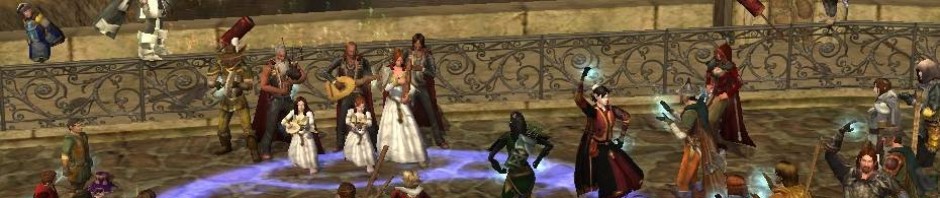
MMORPG fans will be please to know that LotRo isn’t an all-out WoW ripoff. The game does introduce several new elements to the online role playing game realm, like the ability to wear outfits over armor, and a fairly in-depth music system. On high graphics levels, LotR looks great, making it something that can easily compete with most of the MMORPG competition currently on the market. Furthermore, hardcore fans are bound to be pleased by the lore and role playing emphasis found on many of the game servers. On paper, LotRo is a “dream come true” for fans of both LotR and MMORPG’s. In reality, it suffers from two major shortcomings: wavering activity levels, and a frustrating “pay to progress” style formula.

rock out with other minstrels during festive concert events

The Lord of the Rings Online hooks players with a generous free-to-play system that, for the first 20-30 levels (around 20-30 hrs of gameplay), seems to be all inclusive. There’s a nice mix of “Epic” storyline quests and side quests, which give the player the illusion of a massive, free-to-play world. The problem is, while the storyline quests never end, the side-quests do, which leaves unsubscribed players with a massive—and empty—world to explore, just as they’ve likely grown addicted to the game and attached to their characters.

In theory, players can continue to grind and complete Epic Quests to advance through LotRo’s storyline. In reality, that is too mundane for even the most ardent MMORPG players, and an alternative path must be taken. Turbine offers players several options: Players can subscribe for $9.99 per month, and open up all content included in the original game before the release of expansions, which will take players to level 55 or so. Players can also pay one-time fees to open new locations permanently. Finally, players can grind out in-game “Turbine Points” to open these locations up without paying cash; the only truly free way of playing the game, and by far the most grueling.

That sounds nice, but there’s a really big problem. Turbine’s The Lord of the Rings Online is an ever-dwindling community that relies on increasingly expensive expansion packages to make profits. So, think of it this way: while $10-20 bucks and lots of free time can get you through 50 percent of the game within a few months, getting to the endgame requires you purchase quest packs and expansions beyond the original game content which can cost much, much more. The latest expansion pack, Riders of Rohan, cost around $50 for its cheapest version, and so far Turbine has only taken us halfway to Mordor. In the long run, who knows what it’s going to cost to get your character to Sauron’s Black Gates?.

Riders of Rohan is a nice addition to LotRo… for those willing to pay the price of a new game

Think of it this way: I’d estimate that you can play the first 33 percent of The Lord of the Rings Online for free. You can play the second 33 percent for $10-30 bucks, depending how often you play and how much time you’re willing to put into it. But, the last 33  percent is going to cost you upwards of $100 to finish, and the expansions are only getting more expensive and less expansive as they’re released. You might want to ask yourself from the outset: is it really worth it?

At its early stages, The Lord of the Rings Online is fun and full of life, populated by level 20 freebies who do little outside role playing in Bree’s Prancing Pony. But, from there, LotRo changes into something else; something that reminds me of kids with expensive toys and no-one else to play with. If you’re that kid and love The Lord of the Rings, feel free to buy your own road to Mordor. If you’re not, be prepared to be disappointed when Turbine’s Middle-Earth turns out to be little more than a glorified Facebook game.

The Lord of the Rings: War in the North

Remembergames like Champions of Norath and Baulder’s Gate: Dark Alliance? There were fun games marred by repetitive gameplay and bland story-telling. Well, Snowblind, the creator of those games, is back, and they’ve brought War in the North with them. And surprise! it is a fun game marred by repetitive gameplay and bland story-telling.

Most reviewers scored this game around a 5-6, but I think for Tolkien fans it warrants at least a 7-8. WitN puts you in control of a supplementary fellowship of Man, Elf, and Dwarf as they go on a distraction mission taking out Sauron’s forces in–you guessed it!-the Northern echelon’s of Middle-Earth.

While revering of Tolkien’s work, this game fails to exhibit the necessary imagination and take the necessary creative chances required to truly bring Middle-Earth’s uncharted territories to life. Despite the cool premise, Snowblind’s North is a generic and uninspired land, void of any real LotR magic. Cleaving off goblin heads is fun for awhile, but it does start to get tiresome. So does the story of the game, which uses the same basic formula as the premise for every level. As the player, you’re always looking for someone or something that’s just behind a swarm of enemy cantonments. And, when you beat the level boss and he comes back to life bigger and stronger than ever, the eagles are always there to safe you.

Rinse, wash, repeat. That is War in the North, really.

The Lord of the Rings: Conquest

On the previous generation of gaming consoles, there were a handful of surprisingly good Star Wars games called Battlefront. These games were kinda like third-person shooters, but also a little bit like the Dynasty Warriors series in the sense that they allowed players to take part in epic battles of huge numbers. They were cool because, while they had some issues, they were among the first games bring battles on the massive war scale to consoles.

The Lord of the Rings: Conquest is like Battlefront, only themed around Middle-Earth. Unfortunately, it’s not as good as the Battlefront games.

I’m not sure what the problem is with Conquest, but it’s just not as fun. Part of it, I think, is the emphasis on melee combat: melee was never a strong point of the Battlefront games, but that was OK, since you spent most of your time playing as a rifle-bearing storm trooper or rebel gunner. It was easier to mask lackluster melee combat, because it didn’t happen as much. With Conquest, this isn’t true, and the flaws of melee are put on display.

Another problem is that Battlefront’s mass-scale format just isn’t that impressive on the current generation. Huge, map spanning battles were really cool on the PS2, but they hold no inherent virtue that makes them so on the current generation of consoles. That’s probably why there haven’t really been any battlefront games on the 360 or PS3, and also why Conquest just doesn’t deliver.

***

Well, that’s it for now. The list is by no means complete, but these selections do represent some of the more recent LotR themed games to have come out. Some of these games are good, while others are bad, but most are mediocre in their own ways. If you really want a good fantasy experience on consoles, you’re best bet is just to play Skyrim. It’s the only great game that brings together Men, Elves, and Orcs out there, really. And the new expansion DLC, Dragonborn, is out today.