Bright and cheerful Christmas decor traded for this soupy green maze of horrors.
It stressed me out. But weirdly, I found it inviting. Lots of secrets here. Don’t let the samey textures fool you – there are new surprises to haunt you at every new level of this labyrinth.
Tesseract are well-known for their brand of spaced out progressive metal, and their inscrutable concept albums. With War of Being, Tesseract have created another thematically profound sonic experience that would be hard to imagine coming from anywhere else. They are truly masters at what they do.
9. KNOWER – KNOWER FOREVER
I’m late to the party with KNOWER, who are a recent personal discovery. But as a big fan of artists like Thundercat, and DOMI and JD Beck, KNOWER fall right in the pocket of stuff I’m into. What I really liked here were the occasional forays into a style that is reminiscent of the classical works of Aaron Copland. I haven’t heard a band do something that scratched that itch since Emerson, Lake & Palmer. But here, it feels so urban, novel, and trendy.
8. Origami Angel – The Brightest Days
This mid-atlantic emo duo barely have a miss yet, and so-called mixtape “The Brightest Days” continues to show us that, with each release, Origami Angel manage to peel back to another level of maturity as both songwriters and instrumentalists.
7. Jizue – Biotop
With the release of “Biotop”, the Kyoto-based Jizue top even their impressive 2020 effort “Seeds”. Piano player Kie Nizomiyo often steals the show, but I also think guitarist Noriyuki Inoue has never sounded better with the quartet. Here, he pulls from breadth of guitar techniques and styles ranging from jazz to post rock, and helps drive forward the band’s unique to new levels.
6. OK Goodnight – The Fox and the Bird
If anyone saw an all-time great progressive metal concept album dropping by a relatively young band in 2023, it sure wasn’t me. But OK Goodnight just have so much going on in their favor – they’re virtuoso-style players who happen to have an eye for not just art, but storytelling, and they’ve got a leg up thanks to the legion of fans that vocalist Casey Lee William’s brings with her from her work with the Netflix anime series RWBY. I hope they can continue to grow in to one of the most exciting bands in the world of progressive rock and metal.
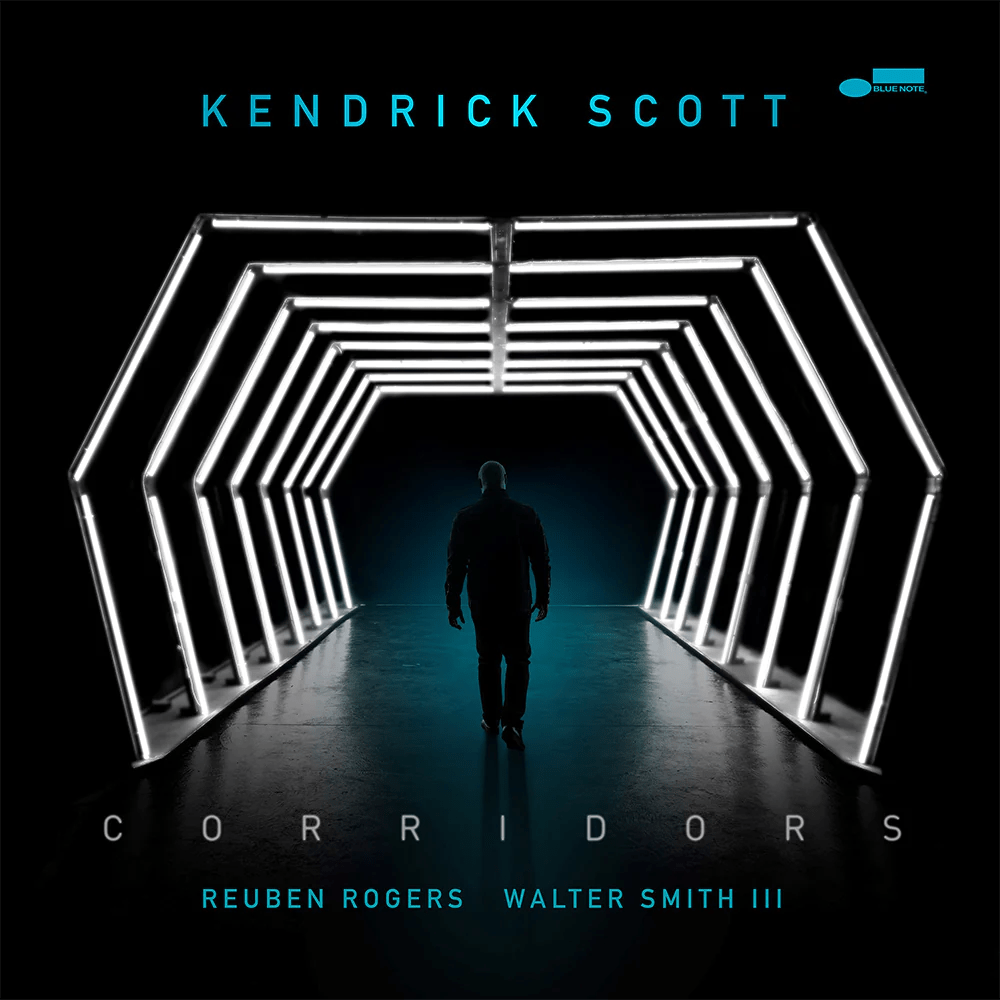
5. Kendrick Scott – Corridors
With Corridors, jazz drummer Kendrick Scott delivers tightly woven work poetry that poses questions about the various doors and hallways of our lives, especially in the context of COVID lockdowns. That kind of thoughtfulness makes Corridors such a special album to return to again and again – not just for the great music, but also for the sort of meditation it invites.
4. Slowdive – Everything is Alive
Having recently undergone a deeply moving experience playing the video game Pentiment, I recognized the labyrinth on the cover of Slowdive’s newest release immediately as something that carried a special significance. Born from grief, “Everything is Alive” is like the labyrinth itself – circular, haunting, beautiful, and, whilst born from grief, ultimately triumphant.
3. Covet – Catharsis
I was as worried about anyone when Covet’s original – and founding – rhythm section decided to dip out of the band earlier this year. I’m still not sure what was going on there, or why that happened. But regardless, both Catharsis and Covet’s subsequent tour under the new lineup proved to me that, without a shadow of a doubt, Covet are still here to stay, and have lost not a single step under the direction of Yvette Young, who is, at this point, a generational guitarist.
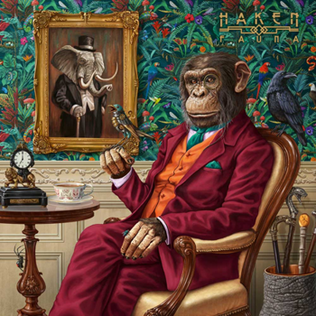
2. Haken – Fauna
Haken were an early interest of mine, but “Fauna” is the first time since the delightful “Aquarius” that I’ve felt they have really lived up to the challenge of being more than a typical progressive metal band. I credit the return of Peter Jones on keyboard. On “Fauna”, I hear more than just Dream Theater inspiration and djent riffs. Instead, I get all that, but also some genuine nods to electronic music, nu jazz, and even pop. Haken are the best band in progressive metal right now – and now we’ll see what Dream Theater can do with the return of Mike Portnoy.
1. Explosions in the Sky – The End
For me, Explosions in the Sky will always be synonymous with how I think about the core post-rock sound. Twinkly guitars weave around each other in the service of simple but tasteful melodies. Sometimes this is heightened by an electronic element, other times it’s contrasted by the sound of a distorted telecasters breaking up a loud fender amplifier. For a long time now, Explosions in the Sky have been off the radar of tastemakers and alt-music enjoyers in general. But for me, they’ve never gotten old, and if End is truly the last thing they ever do as a group, I sure know that I’m going to miss them.
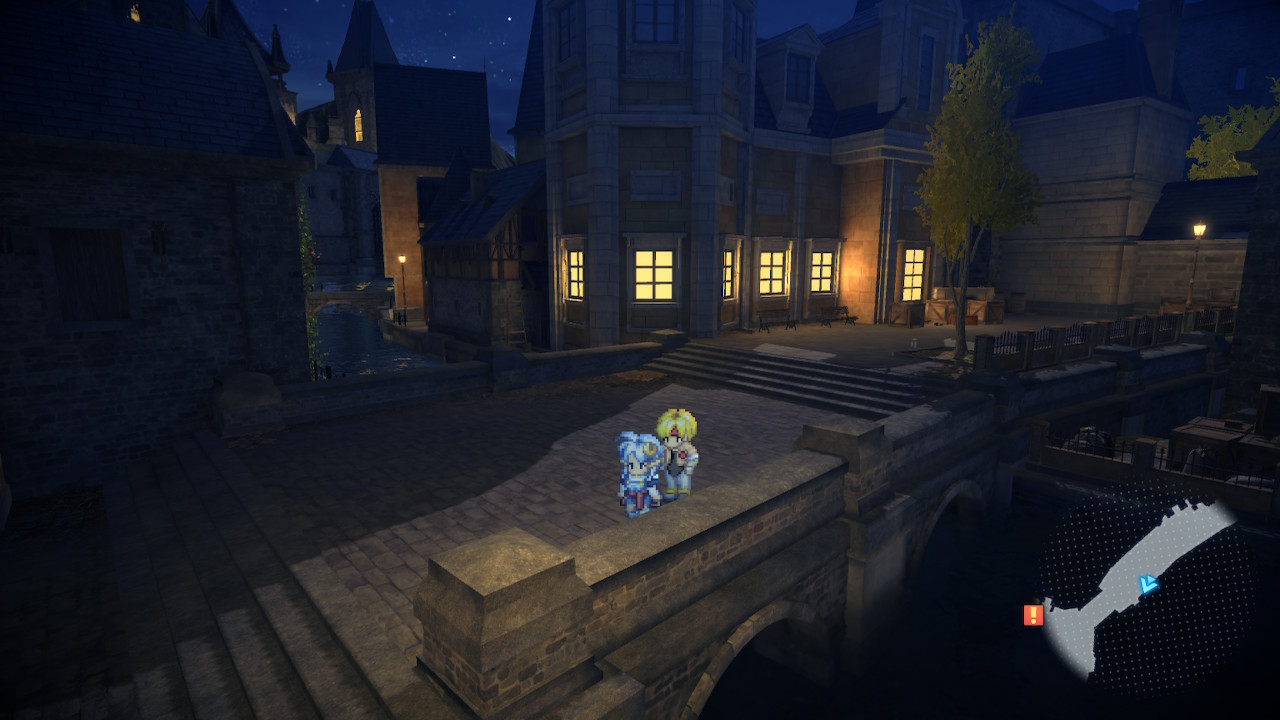
For several years, I’ve been telling myself that I’d get around to playing The Legend of Heroes: Trails in the Sky. As a JRPG-lover like myself, the Trails series has been an embarrassing blindspot that I’ve meant to rectify time and time again. But, opportunities would come and go, and I would just keep finding excuses to not start the game.
When I finally secured a Steam Deck pre-order back in mid-2022, I told myself “now’s the time”. Trails in the Sky would be the first game I played on my new console. Tragically, though, Trails in the Sky has a status of “incompatible” on the Steam store’s compatibility page. I did some research, and I found pages of comments on Steam, reddit, and even from the developer themselves reassuring me that, with one minor caveat (an anime cutscene intro does not work), the game was perfectly playable on Steam Deck.
For some reason, I did not start the game.
I gave into the hype and played Tunic instead. Then I played Unsighted. Then I dicked around with American Truck Simulator and Final Fantasy XIV. Then I played Pentiment. Then I broke up with my Steam Deck (I’ll explain that in a minute) and went back to playing my Switch, apparently for a whopping 347 hours in 2023. It was starting to look like I would never find a reason for the Falcom RPG to be elevated to my “now playing status”.
You can’t play The Legend of Heroes: Trails in the Sky on Switch, but if you could, maybe I’d have gotten around to it sooner. People make fun of the Switch in 2023, but it’s still a perfectly good console that runs most games I’d like to play to an acceptable standard. When the Steam Deck came out, a lot of people talked about it like it was a “Switch-killer”, and I certainly thought my Switch would be decommissioned after my first few sessions with the sexier Valve device, but the Steam Deck (still) has two main drawbacks, at least as far as I’m concerned:
It’s Heavy as Shit
The Official Dock Sucks
As it happens, I’d wanted to use the Steam Deck as both a portable and a living room device at one point, but I just kept running into problems. The biggest one of these was that the Dock just seemed to hate my TV. Its display would shutter and blink constantly, and sometimes it would not display at all.
I worked the problem for an hour or so, but eventually, I gave up after a rare “gaming date night” with my wife turned into a night of her sipping wine on the couch, scrolling her phone and watching me as a sat on the floor troubleshooting. Instead, we decided to play a game on the Switch, because the Switch just works. Our evening was salvaged, and my Steam Deck was ushered off to an empty drawer where its battery gracelessly drained completely over the next 9 days.
No harm, no foul. I had a great year playing my JRPGs on my Switch. I sunk about 80 hours into Octopath Traveller II, many of those hours in the console’s portable mode whilst on a train or in the work cafeteria, but also via longer sessions docked to the TV (and sound system) on weekend nights (the Octopath Traveller 2 audio and soundtrack is glorious, by the way, especially hearing it come through a real set of speakers). I played Final Fantasy Pixel Remaster, DragonQuest, and Phantasy Star much the same way. Then I played Super Mario RPG (2023) and fell into a hole. It was such a special experience for me that I wanted my next game to be something that could be just a special. I thought again about Trails in the Sky, a game beloved by many, just sitting installed on my Steam Deck for over a year now. I thought “now’s the time”.
With great trepidation, I plugged my comatose Steam Deck into its Official Steam Deck Charger, and prepared myself for my next great video game experience. Later that night, I made myself a cup of chamomile tea, and sat down on the couch with the Deck. It was time to finally play The Legend of Heroes: Trails in the Sky.
I played it for an hour or two, and then put the game down. It felt slow, with lots of inconsequential writing. Over the next several nights, I kept going, knowing that many good RPGs take time to get going, and armed with the knowledge that many before me had made it through this common complaint regarding this particular game and its subsequent entries. Around 8 hours in, the magic of the game was starting to work on me. I was starting to care about the characters, and the world around them. I was becoming invested in what would happen next.
Unfortunately, after a week of daily Steam Deck sessions, my wrists were also starting to strain under the device’s immense weight.
I tried propping the Deck up with a lap pillow, but it only worked so well. It was then that I knew that, if I wanted to keep playing The Legend of Heroes, I’d have to once again see if I could get the Dock to work.
Long story short, my Steam Deck dock wasn’t outputting to a display that my TV liked, so once I manually changed the display to something I knew my TV could handle, it was relatively smooth sailing. Pretty weird that I had to do that, and I wish I’d have thought of it back months ago as my date gaming night was slowly melting away, but whatever. No harm, no foul.
Now, life is good. I’m relaxing on the coach on a Friday night, playing The Legend of Heroes on a 55″ flatscreen, and I’m finally getting some good use out of my 8bitdo Pro 2. I’ve got a lot of Trails left to play – more than enough to get me through the holidays, and then some – but truly, now that I’ve figured out this docking situation, the “sky” is the limit. I’m living the dream, something close to the exact ideal circumstances that any gamer with a real affection and interest in old video games hopes to find themselves in one day.
Next up, maybe I’ll figure out how to get that emulator audio to stop crackling.
OK, maybe “dies” is a strong word. Geno, a wooden puppet who becomes animated and joins the party at an early stage, only ever gains sentience because a “higher power” sends him to aide the Mushroom Kingdom in its quest to retrieve the Seven Stars and save Star Road. When the game’s titular quest is fulfilled by the heroes, Geno’s soul simply rises up from his body and returns to the cosmos, reverting “Geno” back to his original form of a puppet.
There’s not a ton of dialogue in Super Mario RPG fleshing out Geno’s self-sacrifice. We are never treated to much melodrama exploring how anyone else from party feels about it. We can assume Mario and the crew liked having Geno around, just as we can assume that Geno enjoyed the time he spent in his corpeal form. When, in the game’s final moments, Geno’s “soul” is seen rising from his body and ascending up over the top border of the frame, we haven’t been told how we’re supposed to feel about it. Mallow – Mario’s cloud sidekick – simply says something like “when we do this, you’ll -“, and Geno and the rest nod along in understanding.
Since the 90s, most role playing games feature what is often described as “way too much talking”. But during the SNES-era and prior, it wasn’t like this. Prior to, perhaps, Final Fantasy IV, video game narratives were not always so hand-delivered to the player, and the RPG faithful had to sometimes use their own imaginations if they wanted more detail around the characters they were controlling and the story in which they were taking part. That is one reason why fan-fiction and video game novelizations became popular online during the 90s. The games sparked the imaginations of the players, who in turn felt compelled to answer questions from their own minds to their own satisfaction.
Games today, with their full voice acting and 100s of hours of content, rarely are willing to leave so much to the player’s imagination. Take Octopath Traveller II, which came out this year, as an example. While I loved the game and the absorbent amount of time I spent with it, I was taken aback by the sheer volume of writing contained in a game that was stylized as a retro JRPG. At no point in Octopath Traveller II is the player spared any detail about what a main protagonist could be thinking or feeling, and I’ll fully admit that, somewhere around 30-40s hours in, I was sick enough of reading what some characters had to say that I’d simply starting skipping a lot of it.
Or take another game I loved, Horizon Forbidden West, as an example: that game features both fantastic writing and world building, to be sure. But the amount of talking that Aloy does is often cited as a criticism, and for good reason. When I am made subject to Aloy’s every passing thought, how I am then expected to ever feel like Aloy’s thoughts are really my own thoughts, or that her struggle is my struggle?
One might say that we’ve got it too good these days, and as a result, the relationship between player and game has changed to something that is undeniably more passive, even as game developers strive to make gaming more immersive.
I probably won’t remember what Super Mario RPG was about, but I’ll always remember how it made me feel.
Specifically, I’ll remember how it made me feel because of stuff near the end involving Geno. Sitting from the sofa, I can’t really say I know how Geno felt about leaving Mario and his friends. I don’t know what it was like for Geno to be alive, for however short of a time that it was.
As the credits rolled, we’re shown an image of Geno reverted back to his puppet form, once again being played with by a child in their room. Over the collage of bright graphics and catchy music, I catch my thoughts drifting to the meaning of life itself: in particular, what it means to be alive, and to have relationships, no matter how transient both may ultimately be. Honestly, it’s hard to imagine a modern production with a large budget giving me so much space to grapple with my own thoughts and feelings. I imagine that giving a player space to sort out their own thoughts carries a certain risk.
What I do know is that I was grateful to get to know Geno just as I was delighted to spend a dozen or so hours with the Mario gang. The credits are rolling now, and the Yoko Shimomura soundtrack is starting to hit. I feel like I’m back on the school bus, looking out the window at my imaginary friend, Mario. And dang it – I’m welling up.
I grew up on meaty PS1 RPGs like Star Ocean: The Second Story. In fact, I think I played that one in particular at least twice. So, it was a foregone conclusion that, when Nintendo dropped the trailer for the game’s remake in a Nintendo Direct earlier this year, someone knew they had me in the crosshairs of a homing missile.
We get a lot of remakes these days, but they’re often modernized as-if to say “here you go, we’ve brought this game up to the present.” Second Story R, too, is more of a remake than a simple remaster, but its reverence to the past strikes as pretty singular – it’s more pixel remaster than port, unwilling to leave any nostalgia dollars on the table in the exchange for convincing younger players that it isn’t old.
I admire the detail that has been taken in recreating the classic Star Ocean entry to make it look and feel – if not function – like the 1998 from our best memories. But, along the way, I’ve also found the retooled version of the game to be uncanny.
I’m about 20 hours into the game, and I am tearing through it with the quickness and efficiency of an NFL quarterback dissecting an underachieving defense. Is this because I beat the game twice – probably – over 10 years ago? Maybe, but the more likely thing is that the game has been subtly redeveloped and designed in ways to polish off all of those rough edges that might have once made it a more deliberate commitment.
Private actions (the game’s primary relationship and side quest vehicle) are now displayed in menu of things you might want to do. Fast travel gets you to them in moments. There are more subtle tweaks that speak to rebalancing, also: I’m overlevelled despite not grinding at all, and have more Skill Points and Battle Points (for leveling up my various abilities) than I know what to do with. Star Ocean: The Second Story was never a difficult game to break, and the remake makes it even easier.
“Was it always this easy?” and “was I always this good?” are some of the thoughts that have run through my head as I careen over the section of the game that once required exchanging the games physical discs. Star Ocean: The Second Story will always have a cherished place in my memory – a place, for better or worse, feels more jeopardized the longer I commit to this beautiful recreation. As Bob Dylan once wisely sang, “You can come back, but you can’t come back all the way.”
Since my teens, I’ve considered myself a JRPG fan more than anything. Now, I’m finally going back to see what stuff my favorite video game genre is really made of.
The earliest Final Fantasy game I’ve ever played was IV, and that was the version of it that appeared in the Playstation “Final Fantasy Chronicles” collection. While I’d bought that collection primarily for Chrono Trigger (my older, wiser cousin had sworn it was the best thing ever), I’d always known that I wanted to eventually go back and play the older Final Fantasy games. Having played titles such as VII and X to completion, I already knew that I was a “fan” of the Final Fantasy series. It would just be a matter of catch-up.
Growing up, I never had Nintendo consoles. My parents were staunchly anti-video game, until finally one Christmas they surprised my brother and I with a Playstation. But even as I tore through games like Final Fantasy VII, Star Ocean II, Xenogears, and several others, the voices calling from the genre’s heyday on the SNES and Genesis rang loud. Rather than seek out an older console that I never had the chance to play, I turned to ports – Final Fantasy IV and Chrono Trigger in the Final Fantasy “Chronicles” Collection, Final Fantasy V and VI in the “Anthology” counterpart, and Final Fantasies I and II in the “Origins” bundle.
Unfortunately, other than Final Fantasy IV, which I loved (anachronistic PS disc loading times and all), I never got around to playing many of these games, though I purchased them all. I blame the release of the PS2, which would soon find its way into my bedroom, bringing titles like Xenosaga, Star Ocean 3, Final Fantasy X, Wild Arms 3, and many others with it. And then, forget about RPGs, there were also games like Snake Eater to be played.
Time marched on, and when my PS2 was eventually softly laid out to pasture for the new Xbox 360 which accompanied me on my way to college, little did I know at the time that the JRPG had already sang its swan song, replaced by massive western RPGs like Fallout, Skyrim, and Mass Effect. Sure, I’d hit on a few of the better Japanese entries – like Persona – in my adult life, and I’d play the new (and befuddling) Final Fantasy installments, but it no longer felt the same. The JRPG just felt kind of like an obsolete piece of tech that was no longer worth using.
But over the last few years, things have started to change. Dragon Quest XI was released, and was an absolute delight. Square Enix’s smaller studios also delivered exciting new games in the old style, like Octopath Traveler II, as well as a decent new entry in the Star Ocean series. Suddenly, the JRPG has felt very interesting to me again.
I’ve remembered how much I like the JRPG, and I don’t want to forget about it ever again. So, over the next several years(???), I’ll be making a result to play some of these games that I’d never gotten around to, including some of the genre’s earliest entries. It’s no small project, but I plan on taking my time with it. There is a lot of stuff of game there, and no need to rush into all of it at once.
In one of the final scenes of Wong Kar Wai’s Happy Together, Lai Yiu-Fai (as performed by Tony Leung Chui-Wai) stands alone on viewing platform besides Argentina’s Iguazu Falls. As the Iguazu rush over him in a violent torrent, the viewer is shown an aerial, top down view of the falls gushing into an indistinct cloud of mist. It seems like the falls could be headed anywhere – perhaps into a hole in the Earth that has no end.
“Direction” is an important concept in every Wong Kar Wai film that I’ve seen, and seems to be a constant theme of his work, whether it be the various clocks on the walls in Days of Being Wild pointing some allotted time, or the train bustling forward in perpetuity in 2048. “Where are we going, and what will it be like when we get there?” seems to be a question that all Wong’s films ask in some way or another. Though the answer is never clearly defined, Wong’s continuously found new ways to keep asking. Here, the Iguazu Falls – unstoppable, forceful, and hurdling toward profound uncertainly – are a continuation of this metaphor.
Given Wong’s status as a Hong Kong director, it may be tempting – and is truly possible – to view all of his films as allegories of Hong Kong’s exit as a British colony, and eventual reunification with the People’s Republic China. Could Fai, Po-Wing, and Chang be themselves metaphors for Hong Kong, China, and Great Britain? One of Fai’s major arguments with Po-Wing centers around the number of past boyfriends that Po-Wing has had. Like the British and Hong Kongers, these two seem destined for an ugly break-up. Also like that same relationship, one of these men (Fai) seems to have been truly hurt and misled, while for the other (Po-Wing) could been seen as the surrogate for a relationship-colonizer, to whom Fai is just another fling that didn’t work out.
But I think there’s a lot more to Happy Together than that, even if the political interpretation of Wong’s body of work is too present and yielding to completely ignore. Fai is an exile – socially, nationally, and even within his own family. As a gay Asian man living in Argentina, he has very little to his name – a job that barely supports a meager existence, few relationships, and a boyfriend who does not seem to care for him very much. On paper, Fai is a sympathetic character, but Wong’s genius lies in his ability to truly make the viewer feel the full depth of emotional confusion that his characters are feeling. That Wong’s films work not only so well on the personal level, but also as intellectual, political, and perhaps even philosophical metaphors, is just another mark of his genius.
Twenty-Four Eyes starts simply enough. It’s the end of summer, and the young Hisako Oishi is biking into town to embark on the first step of her career as a teacher. Wide-eyed children and skeptical parents alike look on with curiosity at the modern, independent, westernized woman who will serve as their educator for the next year.
Oishi is a good teacher. She speaks to her students on their own level. She shows curiosity about their lives, supports their dreams, and empathizes with their pain. She knows how to handle the bad ones, or the “bullies”, while making the good ones feel even more special and close to her. Ultimately, though, Oishi’s education style is at odds with a mid-century Japan that is hurtling toward a nationalistic war.
As the years pass, Oishi begins to receive criticism from her superiors, peers, and even some of her students. She is called a “Red”. Even though her lessons don’t seem to be motivated by ideology, the way that she is simply interested in the personal well-being of each and every student is enough to mark her with this accusation. At one point, she pushes back on a group of war-hungry sixth-grade boys by telling them she thinks it’s better to be a fisherman than to die for one’s country.
Ultimately, though, Japan continues its march to war, and there is little that single teachers like Oishi can do to stop it. She gives up her job as a teacher to focus instead on raising her own family, and even they look at her with skepticism when she voices anything less than full throated support of the war effort. As the war trudges on, the Japanese army go on to commit various atrocities, before suffering horrifying defeat. Director Keisuke Kinoshita need not spend any time of his film focusing on recounting these horrifying events, which would have been fresh in the mind of his audiences.
Oishi’s husband and some of her students never return from the war. But those that do slowly begin to find themselves sobering from the nightmare of fascism. Eventually, Oishi returns to teaching, and is accepted with great joy by her former students, who have now become the next generation of parents. The film ends on a heartwarming final scene – Oishi, surrounded by her former students, singing and laughing as they recall the old days before the war. They seem, at this point, symbolic of Kinoshita’s own sentiments toward himself and his countrymen: They may have lost their minds and done horrible things under the shadow of fascism, but they were never bad people to begin with. And so they could go always decide to go back.
I didn’t really know that I needed Closure or Continuation regarding Porcupine Tree, but then I saw them live at the Met in Philly, and man, turns out I really missed them. Often, bands come back after decades only to release a single mediocre reunion album before returning to obscurity. C/C manages to avoid that tendency. It serves as a reminder of what we liked about PT all along, sure, but it’s also one of their strongest albums yet, and proof that the band have more to say.
9
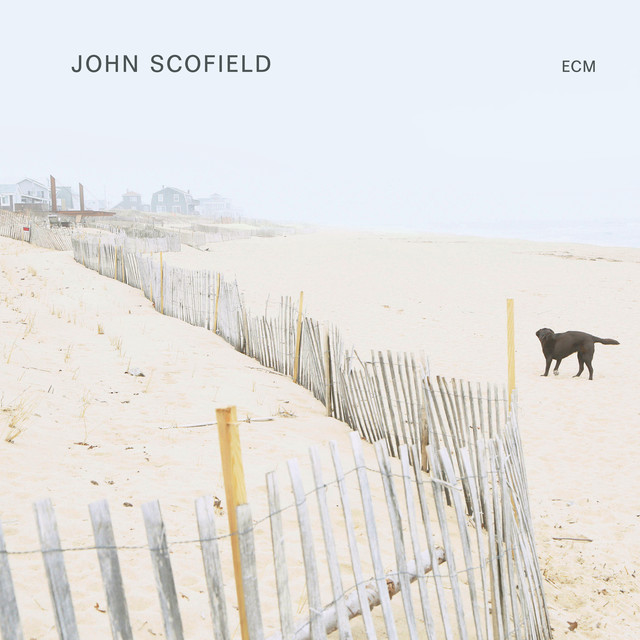
John Scofield – John Scofield
A warm and inviting solo(?) jazz guitar album that features the masterful playing we’ve come to expect from Scofield, who fills incredible amounts of space despite each song only consisting of a few clean guitar tracks. The sound is not so much “sparse” as it is tasteful and delicate; one of the most pleasant albums I heard in all of 2022.
8
The Weeknd – Dawn FM
The Weeknd builds on his familiar dark-electronic tinged aesthetic with this masterpiece; not only one of his most fully-realized works, but one of the nicest concept albums I’ve heard in several years. It’s the type of album where you can’t listen to it without feeling drawn into the questions posed by the overarching work; and it’s incredible catchy – once you start it, you’ll just want to listen through until the very end.
7
deathcrash – Return
If you’ve got a hankering for a blend of Red House Painters-style Slowcore with American Football-style Midwest Emo, there are no better 2022 albums to turn to. deathcrash nail the aesthetic and the overall sound perfectly, so much so that, with this debut, the instantly became one of my favorite new bands.
6
Julian Lage – View with a Room
Lage’s playing is such a treat to begin with, but “View with a Room” just sounds so good. The compositions cover many different tempos, styles, and moods. And the addition of Bill Frissel as a second guitar player on this record really enhances the depth of the overall atmosphere and sound of each song.
5
DOMI and JD Beck – NOT TiGHT
A fantastic debut from two young prodigies the nails this confluence of neo-soul, nu-jazz, and chillhop influences. A starstudded affair that includes appearances from Thundercat, Herbie Hancock, Anderson.Paak, Snoop Dogg, and even the great Kurt Rosenwinkel. Honestly, with a debut like that, how much better could it possibly get?
4
And So I Watch You From Afar – Jettison
A wonderful song-cycle brimming with nostalgia and sentiment. The sparsely decorated spoken-word sections do just enough to heighten the emotional connotations of the music’s drawn out tensions. And I’m right at home with these post-rock guitars and these strings. Barely a dull moment to be found. There are plenty of post-rock bands, few reach the level of ASIWYFA when they are at the top of their game.
3
Soccer Mommy – Sometimes, Forever
Soccer Mommy delivers yet again with another thorough record that is thematically interesting as it is rich with catchy melodies and provocative turns of phrase. Whereas the preceding record, “Color Theory”, explored the shades of grief and depression as related to the color palette , “Sometimes, Forever” looks at the contradictions that have accompanied Sophie Allison’s newfound success: the irony of the continued human struggle, and the loss of personhood that lurks behind one’s burgeoning public life.
2
Black Midi – Hellfire
Black Midi is a force unlike much else. “Hellfire” combines the energy of a punk band with the finesse and artistry of peak Peter Gabriel-era Genesis. I was blown away, at times, with how intense and aggressive this album could sound. Other times, I was swept away by its beauty. With “Hellfire” Black Midi are 3 for 3, cementing themselves as one of the best new bands around.
1
Elephant Gym – Dreams
Elephant Gym have, single-handedly, taken the genre of “math rock” and elevated it not only to the next level but several levels beyond that. Is this even “math rock” anymore? Is it jazz? Is it folk? Is it sample-based music? Throughout the course of the album, you hear all of those influence. You also will hear (I counted) at least 5 languages. I love the diversity of it all. They are so unparalleled in their uniqueness, their approach, and their ability to inspire. And that is why “Dreams” is my favorite album of 2022.

















 The Tingle Review