When the Amount of Video Game is “Just Right”

Video games are getting too big. It’s a familiar refrain I keep hearing from friends of mine, regardless of what else they’ve got going on in their lives. Some of those who say this are people like myself – parents who might play a game for 30-60 minutes at the end of a long day. Others are simply people who have more than one hobby, and have found that keeping up with the year’s slate of major video game releases leaves time for little else. And then there are people who have gaming as exclusive hobby, and still, even they don’t even have time to play all of the things they’d like to.

I love adventure games and RPGs, but looking over the year’s calendar of releases, it’s easy to see the problem. It would just be impossible to play everything that I’d want to, despite how poorly-regulated as my gaming habit tends to be. After all, almost every game has 100 hours of content, and next year there will be even more games out competing for my attention.

It’s hard to believe that, once upon a time, games weren’t so focused on being so addictive. Take Link’s Awakening, which I just finished on my Analogue Pocket: 8 main Dungeons, which probably take an experienced player 30-40 minutes to complete, and a few side quests. Overall, I finished the game in less than 14 hours, and mostly played it in 20-30 minute bursts that easily fit into my schedule.

That’s one of the things I miss the most about retro games, and why I still like playing them so much. Games like Link’s Awakening and Final Fantasy Adventure, which I played earlier in the year, feel more like creative projects – endeavors to craft a memorable but finite experience for players who craved innovation and novelty. Far from being like today’s massive life-replacement experiences, I found something touching and true in Link’s Awakening allegory-like narrative.

“This is all a dream,” Link’s Awakening tells the player. “We’ve poured our best ideas into it, and hope you love it.

“But really, player, it’s a dream. And out there is your life. And you should want to wake up”.

Gaming Microblog #009: Yakuza Kiwami (2016)

Although Kiwami presumably comes with a slathering of new features and story content not present in the original Playstation 2 game, it still feels like a more focused effort than its predecessor, Yakuza 0, which, in retrospect, it starting to look like the triple-disc “Greatest Hits” entry of the series. Initially, I felt somewhat let down by what seemed like a parsed-back Y0 “DLC”, but by the end, I found that I actually preferred Kiwami for its narrower scope and more limited range of features. Still, nothing less than a full game, with RPG-style cinematic storytelling quasi-RPG systems worth investing in.


Yakuza Kiwami

Playstation 4 (Via Playstation 5 Compatibility)

Dates Played: 7/12/2024 – 8/20/2024

Playtime: 27 Hours

Gaming Microblog #008: Final Fantasy 7: Rebirth (2024)

SPOILERS BELOW


There’s one segment of Final Fantasy VII: Rebirth’s many ending scenes that has stuck with me, months after finishing the game. The scene takes place in an alternate reality Midgar, where the lifestream has dried up and the planet has died. Here, Cloud has just awakened from a coma, and has gone on an impromptu date with Aerith in the Sector 5 slums, hoping to have a nice time in the last days of the crumbling world. 

Unfortunately, Cloud and Aerith’s date turns out to be a pretty bad one. First, Cloud tries to buy Aerith a piece of jewelry, but whichever one he picks turns out to not be for sale. Later, Cloud and Aerith encounter a street vendor who offers them a host of candies to choose from, but no matter which of the colorfully packaged treats they select, the vendor guilts them into trying her own experimental homemade candies instead. The candies aren’t very good. Finally, Cloud and Aerith encounter a street photographer who is taking photographs of couples on the street. Unfortunately, he has only one shot remaining on his last roll of film, and decides to take another couple’s picture instead.

This scene really resonated with me because, as Sinatra sang, “that’s life”. And the resignation here underscores a lot of life’s disappointments that we all experience day to day, even when things we are supposed to enjoy end up not being very fun. But also, I feel like this scene might aptly describe Square Enix Creative Business Unit I’s feelings about their own work: in Rebirth, they’ve prepared a buffet of options for fans, but not matter how many of their wares they unpack and place on the table, their own game must be a singular experience that will likely not meet everyone’s, or even anyone’s, lofty expectations. They’ve offered their absolute best work, and now it’s up to the players to have a positive experience for themselves by not letting the negatives define their experience. “That’s life!”


Final Fantasy VII: Rebirth

Playstation 5

Dates Played: 2/29/2024 – 6/26/2024

Playtime: 88 hours

Gaming Microblog #001

I came, I saw, I conquered. In the end, I freed a genie from a bottle.

He granted me a wish, as all genies are supposed to for their liberators.

I wanted a castle, but it turns out, that wish would require a corresponding sum of cash for this particular genie to make it my reality.

No problem for Wario. Wario is from the school of Hard Knocks, unlike his more popular cousin.


Super Mario Land 3: Wario Land

Original Cart played on Analogue Pocket

Dates Played: 12/25/23 – 12/28/23

Playtime: 2.5 hours

Film Report: Twenty-Four Eyes

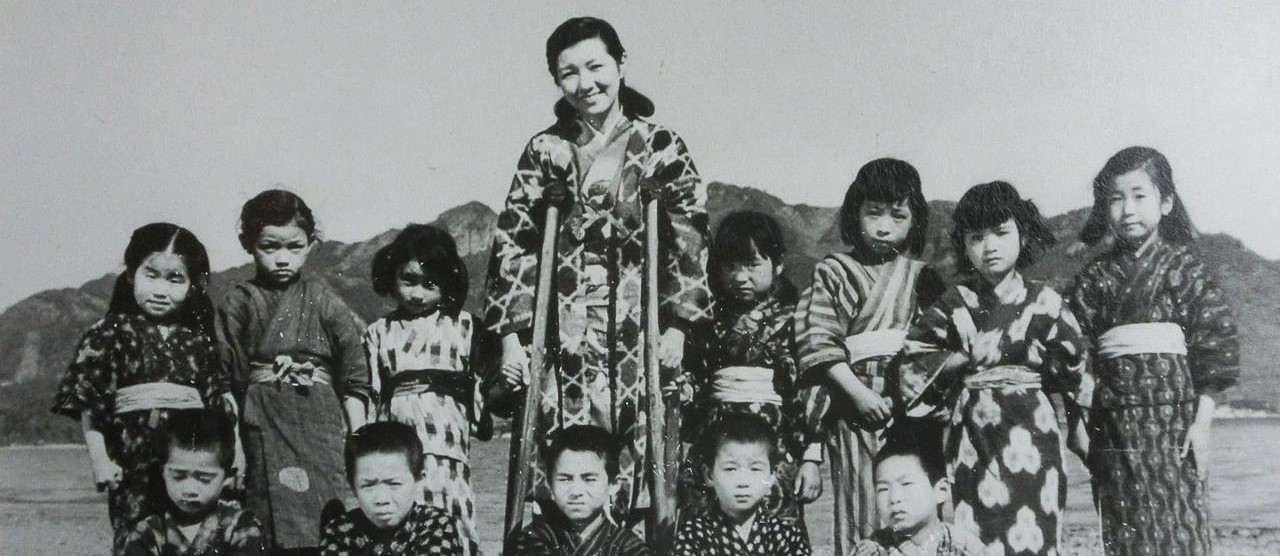
Twenty-Four Eyes starts simply enough. It’s the end of summer, and the young Hisako Oishi is biking into town to embark on the first step of her career as a teacher. Wide-eyed children and skeptical parents alike look on with curiosity at the modern, independent, westernized woman who will serve as their educator for the next year.

Oishi is a good teacher. She speaks to her students on their own level. She shows curiosity about their lives, supports their dreams, and empathizes with their pain. She knows how to handle the bad ones, or the “bullies”, while making the good ones feel even more special and close to her. Ultimately, though, Oishi’s education style is at odds with a mid-century Japan that is hurtling toward a nationalistic war.

As the years pass, Oishi begins to receive criticism from her superiors, peers, and even some of her students. She is called a “Red”. Even though her lessons don’t seem to be motivated by ideology, the way that she is simply interested in the personal well-being of each and every student is enough to mark her with this accusation. At one point, she pushes back on a group of war-hungry sixth-grade boys by telling them she thinks it’s better to be a fisherman than to die for one’s country.

Ultimately, though, Japan continues its march to war, and there is little that single teachers like Oishi can do to stop it. She gives up her job as a teacher to focus instead on raising her own family, and even they look at her with skepticism when she voices anything less than full throated support of the war effort. As the war trudges on, the Japanese army go on to commit various atrocities, before suffering horrifying defeat. Director Keisuke Kinoshita need not spend any time of his film focusing on recounting these horrifying events, which would have been fresh in the mind of his audiences.

Oishi’s husband and some of her students never return from the war. But those that do slowly begin to find themselves sobering from the nightmare of fascism. Eventually, Oishi returns to teaching, and is accepted with great joy by her former students, who have now become the next generation of parents. The film ends on a heartwarming final scene – Oishi, surrounded by her former students, singing and laughing as they recall the old days before the war.  They seem, at this point, symbolic of Kinoshita’s own sentiments toward himself and his countrymen: They may have lost their minds and done horrible things under the shadow of fascism, but they were never bad people to begin with. And so they could go always decide to go back.

Learning Japanese: What Happened?

In 2020 I committed to explore one of my lifelong fascinations: the Japanese language. Lack of a focused plan of study and other life priorities allowed my efforts to dissolve.

In 2019, my life was a carnival of free time. I had time for all my hobbies. I even exercised on most days. The only existential dread I felt was directed at how I should be spending all this time – is it worthier to play a guitar at a high level, or work on Classical Chinese? Should I learn a new language, or should I enroll in a degree program? As time went on, I felt like my schedule was pretty solid and that I was ready to begin a new hobby. I committed to “Learning Japanese” as my 2020 New Year’s resolution. But change was coming: one change was something I knew about – my wife was just beginning her second trimester. The other – the coronavirus – was just a rumor, like West Nile Virus or Swine Flu.

The coronavirus was initially a boon to my study time. With a pregnant wife and so much indoor time, I committed to as much study as possible, as has been documented pretty thoroughly in this blog. When I became a parent, that changed. Initially trying to work from home with an infant was incredibly demanding, robbing me of the mental energy and relaxed conditions I required to focus on myself. After those hard first though, I found that I had a little bit of room to get back to some of my old hobbies – just not all of them. I opted to “declutter” my personal life of all the things that I didn’t see as essential to my identity, and focused entirely on playing guitar and maintaining my Mandarin language skills. That’s what I did before COVID and being a parent, right? So those things logically must be the real “me”, with everything else being little more than superfluous activities resulting from an excess of free time.

Or so I thought. For sure, quitting Japanese and declining to try anything new helped alleviate some of the stress that was beginning to overwhelm me in 2020. But after a bit of a reprieve, I started to feel that 2021 offered a real dearth of new experiences for me other than the ones prompted by parenthood, and as a result I’ve felt pretty hollow. Looking back on my experience learning Japanese, it’s clear that I was just fumbling around, first with Pimsluer, then with other methods – mostly self-guided. I never had a plan, or a clear motivation. I never really invested in a class, or tutoring. I just wanted to be someone who is good at new things they try, and rarely did I ever stop and think about how much enjoyment I was getting along the way. It almost feels like language acquisition – along with my other hobbies – were devolving into exercises of self-esteem, rather than pleasure. An abundance of time smoothed over the edges caused by abruptly shifting goals, as will as inconsistent temperaments and rationalizations for studying. As a young parent, I learned that doesn’t work. I need to do things for myself, for the pleasure of doing them.

In the end, I still haven’t learned Japanese. And maybe I never will. But I’ve learned something more valuable – that time is precious. When I started Learning Japanese, I went the cheap route. I didn’t want to commit to classes or tutoring until way too late, because I felt insecure about the whole project – why should I invest a lot of myself into something that might not get my anywhere? Through all this, I never allowed myself to consider that my own pleasure was worth it. In the future, I hope I’ll continue to try new things, like I did with Learning Japanese. But I also hope that I’ll have the courage to really commit to them both financially and as far as my schedule and personal priorities allow. Because I am worth it.

Learning Japanese: Month 3 Recap

In the past two months, I’ve struggled to find a method that really works for me. But two weeks into isolation, I’ve at least learned how to write the Hiragana from memory, and feel my sense of commitment renewed.

In my first month learning Japanese, I blogged extensively about my successes and frustrations using the Pimsleur app. I decided to abandon the app and its subscription fully after completing the first set of courses, once I was sure that it would never deliver the more holistic approach to learning a language that I crave: particularly, a solid literary component.

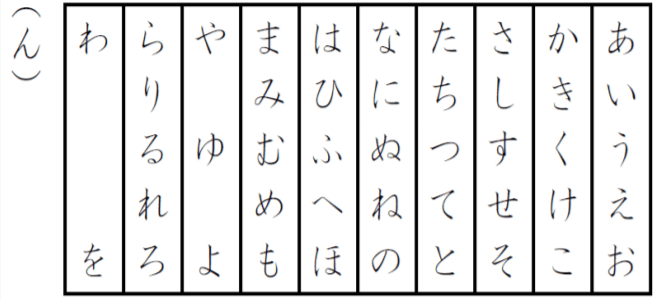
Upon quitting Pimsleur, I floundered. I tried Genki, but to no avail. I struggled to pick up and retain the vocabulary of even lesson one, because of one simple reason: I lacked a strong foundation of understanding Hiragana and Katakana. Genki doesn’t teach you Hiragana or Katakana, it just expects you to memorize it. I downloaded SRS apps designed for this very purpose, but it was to no avail. Even after sinking hours into these kinds of applications, I found myself able to recognize kana only in familiar contexts, but at a loss when it came to writing them out.

I need a tutor to teach it to me, I thought. Well, maybe. I headed back to Preply, where I currently have a great experience with a Mandarin tutor from Taiwan. I messaged with a few tutors, and many of them said the same thing, something along the lines of: “I’d be happy to meet with you, it’d be best if you learned the Hiragana first, though.”

It dawned on me. As a student of Japanese who is not at all content with only learning the spoken language and would like to spend at least an equal amount of time on the written forms, I was never going to be able to start learning Japanese until I learned Hiragana and Katakana. In retrospect, it seems so simple, but I was having trouble getting it through my own thick skull.

COVID-19 happened, and in either smart business planning or sheer luck, Udemy ran a sale. I said, “What the hell!” and bought this course for $10. While I was there, I bought a Pixel art course for $10 as well. What else am I supposed to do during the pandemic?

So… the Udemy Hiragana course is painstakingly slow. The teacher spends about 10 minutes per lesson going through each row of Hiragana, showing you how each of the individual Hiragana are pronounced, and then writing them out for you a couple of times. After the instructor completes a row, there are usually a five minute quiz where you must write out words the instructor speaks and then pronounce words she writes on the whiteboard.

Sounds excruciating to spend 10-20 minutes on just one row of Hiragana, but you know what? I paid for it, so I watched it all, following along with my own notebook, and taking the optional step of writing out the entirety of the Hiragana I had learned so far after each lesson… as it turns out, one week later, I can happily say that I know my Hiragana (just got to get better at those pesky voiced sound and p-sound alterations). Keeping them in my memory isn’t a problem, and doesn’t require an app, as it literally only takes like a minute or so to write them all down.

So, wow, I think I’ve accomplished setting that foundation, now I think I’ll go and book that Preply tutor 🙂

Learning Japanese: Week 2 Recap – Hiragana Begins

The Pimsleur grind continues in week 2 of my Japanese studies, but I almost made a fatal mistake: I almost didn’t realize that I’m supposed to be studying Hiragana.

Phase 1: The Grind Continues

So far, so good on the Pimsleur approach. As I continued to make my way through lessons this week, I found that in general things seemed to be getting harder. The brief honeymoon period I felt last week, where I confidently could say that I understood everything in a lesson, is long gone. Now, I rely on Pimsleur’s repetition to keep me going. Gradually, the new words and concepts seem to sink in – thought it takes a few lessons. I am still baffled, for instance, why sometimes “I want to eat dinner” is:

Watashi wa ban-gohan o tabemasu.

And other times it’s:

Watashi wa ban-gohan o tabe-tai desu.

And there are other forms of the tabe-speak that I would recognize, but not distinguish. Right now I’m just rolling with it, hoping that the concepts become clearer over time.

This was a very busy week, and I’m amazed that I was actually able to go on without breaking the chain – I studied at least 30 minutes every day, though this came with some compromises. Given a busier than usual work schedule, I had no choice but to multitask my study or abandon it for the day.

Also given that schedule, I did not play the games in the app nearly enough. This lack of review hurt my comprehension, though the games that Pimsleur come with are optional (OG Pimsleur courses were, IIRC, audio only). But this was almost fatal, as I didn’t realize until Lesson 15 that “Reading” practice began to appear in the app starting with Lesson 11. And so we begin Phase 2: Hiragana.

Understanding the Hiragana

Pimsleur apply’s the same method to learning Hiragana that is does to learning the spoken language. That is to say, it introduces a very small number of phonetic symbols first, then begins (somewhat gently) drilling you on a mix of words you know and do not know. Many of the Hiragana examples do not follow the same vocabulary from the spoken lessons, but some do. For example, the first two symbols you learn are “は ha” and “い i”, and then together, “はい hai” or a word similar to “yes” in English.

I’m taking it slow, but learning to read another phonetic alphabet is exciting, and the lightbulb moment of seeing a word and realizing once you sound it out and that it’s a word you know is really cool – something I never experienced with learning Mandarin.

Next Steps

Thanks to today’s discovery, I’m still several lessons backlogged on reading practice. So I have some makeup work to do, then I’ll continue on with the Pimsleur audio lessons and make sure that I don’t skip the supplementary practice. In the meantime, guess it’s time I find a good Hiragana/Katakana/Kanji keyboard. I already use two keyboards for English and Chinese (which toggles between Simplified and Traditional character sets), so hopefully adding yet another doesn’t cause too much confusion!

But first, a little treat. Tonight my wife and I are going to see “Weathering With You” in theaters. I really enjoyed the previous movie from this studio, “Your Name”, so I’m excited to see this one. This is the first Japanese language content I’ll have watched since I began this language learning process, so I hope to pick up a few words. Hey, I’ve known one way to ask about the weather since day 1! ii o-tenki desu ne?