Respecting the Past: Star Ocean: The Second Story R

I grew up on meaty PS1 RPGs like Star Ocean: The Second Story. In fact, I think I played that one in particular at least twice. So, it was a foregone conclusion that, when Nintendo dropped the trailer for the game’s remake in a Nintendo Direct earlier this year, someone knew they had me in the crosshairs of a homing missile.

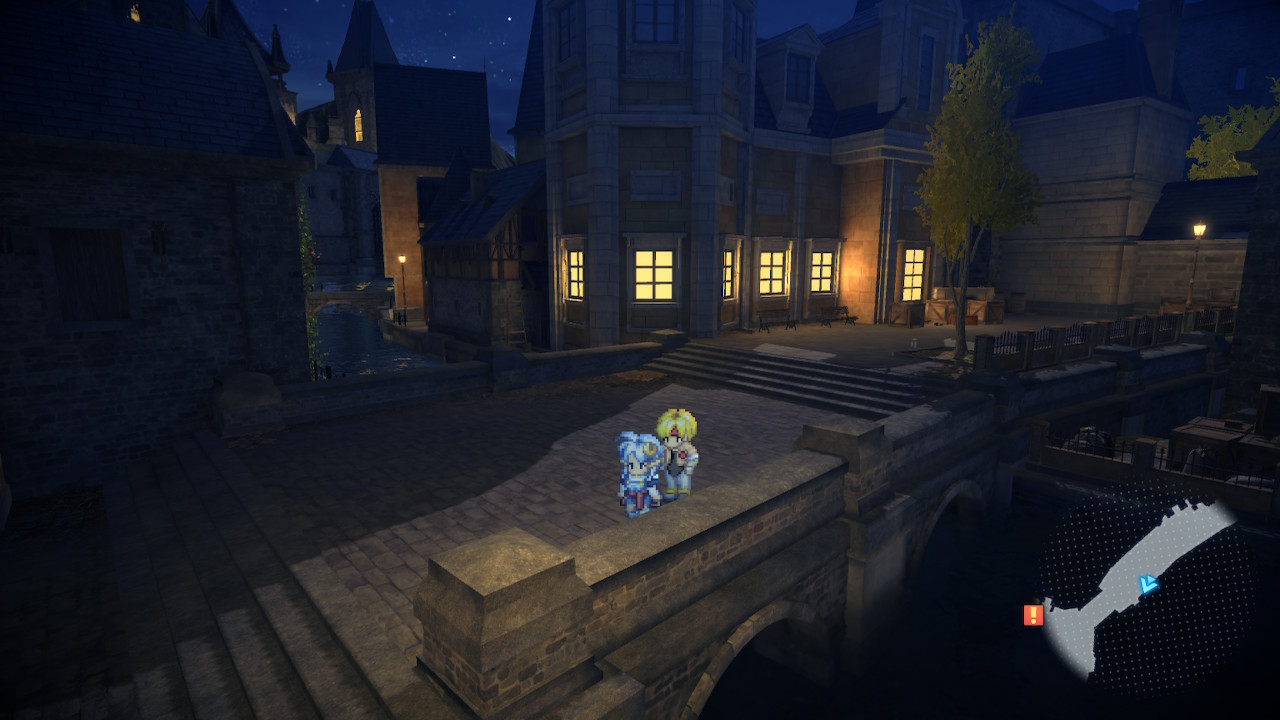
We get a lot of remakes these days, but they’re often modernized as-if to say “here you go, we’ve brought this game up to the present.” Second Story R, too, is more of a remake than a simple remaster, but its reverence to the past strikes as pretty singular – it’s more pixel remaster than port, unwilling to leave any nostalgia dollars on the table in the exchange for convincing younger players that it isn’t old.

I admire the detail that has been taken in recreating the classic Star Ocean entry to make it look and feel – if not function – like the 1998 from our best memories. But, along the way, I’ve also found the retooled version of the game to be uncanny.

I’m about 20 hours into the game, and I am tearing through it with the quickness and efficiency of an NFL quarterback dissecting an underachieving defense. Is this because I beat the game twice – probably – over 10 years ago? Maybe, but the more likely thing is that the game has been subtly redeveloped and designed in ways to polish off all of those rough edges that might have once made it a more deliberate commitment.

Private actions (the game’s primary relationship and side quest vehicle) are now displayed in menu of things you might want to do. Fast travel gets you to them in moments. There are more subtle tweaks that speak to rebalancing, also: I’m overlevelled despite not grinding at all, and have more Skill Points and Battle Points (for leveling up my various abilities) than I know what to do with. Star Ocean: The Second Story was never a difficult game to break, and the remake makes it even easier.

“Was it always this easy?” and “was I always this good?” are some of the thoughts that have run through my head as I careen over the section of the game that once required exchanging the games physical discs. Star Ocean: The Second Story will always have a cherished place in my memory – a place, for better or worse, feels more jeopardized the longer I commit to this beautiful recreation. As Bob Dylan once wisely sang, “You can come back, but you can’t come back all the way.”

The Great JRPG Project: Exploring the DNA of my Favorite Video Game Genre

Since my teens, I’ve considered myself a JRPG fan more than anything. Now, I’m finally going back to see what stuff my favorite video game genre is really made of.

The earliest Final Fantasy game I’ve ever played was IV, and that was the version of it that appeared in the Playstation “Final Fantasy Chronicles” collection. While I’d bought that collection primarily for Chrono Trigger (my older, wiser cousin had sworn it was the best thing ever), I’d always known that I wanted to eventually go back and play the older Final Fantasy games. Having played titles such as VII and X to completion, I already knew that I was a “fan” of the Final Fantasy series. It would just be a matter of catch-up.

Growing up, I never had Nintendo consoles. My parents were staunchly anti-video game, until finally one Christmas they surprised my brother and I with a Playstation. But even as I tore through games like Final Fantasy VII, Star Ocean II, Xenogears, and several others, the voices calling from the genre’s heyday on the SNES and Genesis rang loud. Rather than seek out an older console that I never had the chance to play, I turned to ports – Final Fantasy IV and Chrono Trigger in the Final Fantasy “Chronicles” Collection, Final Fantasy V and VI in the “Anthology” counterpart, and Final Fantasies I and II in the “Origins” bundle.

Unfortunately, other than Final Fantasy IV, which I loved (anachronistic PS disc loading times and all), I never got around to playing many of these games, though I purchased them all. I blame the release of the PS2, which would soon find its way into my bedroom, bringing titles like Xenosaga, Star Ocean 3, Final Fantasy X, Wild Arms 3, and many others with it. And then, forget about RPGs, there were also games like Snake Eater to be played.

Time marched on, and when my PS2 was eventually softly laid out to pasture for the new Xbox 360 which accompanied me on my way to college, little did I know at the time that the JRPG had already sang its swan song, replaced by massive western RPGs like Fallout, Skyrim, and Mass Effect. Sure, I’d hit on a few of the better Japanese entries – like Persona – in my adult life, and I’d play the new (and befuddling) Final Fantasy installments, but it no longer felt the same. The JRPG just felt kind of like an obsolete piece of tech that was no longer worth using.

But over the last few years, things have started to change. Dragon Quest XI was released, and was an absolute delight. Square Enix’s smaller studios also delivered exciting new games in the old style, like Octopath Traveler II, as well as a decent new entry in the Star Ocean series. Suddenly, the JRPG has felt very interesting to me again.

I’ve remembered how much I like the JRPG, and I don’t want to forget about it ever again. So, over the next several years(???), I’ll be making a result to play some of these games that I’d never gotten around to, including some of the genre’s earliest entries. It’s no small project, but I plan on taking my time with it. There is a lot of stuff of game there, and no need to rush into all of it at once.