Dylan, Knopfler Perform for True Believers

Image

(image cred: http://3.bp.blogspot.com)

It’s 9:30 pm Monday night, and Dylan has just taken the stage at Wells Fargo, accompanied by the cacophonous warm-up of his band. Moments earlier Mark Knopfler had encored, offering perhaps his only appeal to the greatest hits crowd in his set for evening. The tone for the night had been set: this was to be a show for true fans and diehards, not for casual fans and listeners desiring a nostalgic experience.

For most of the set, Mark Knopfler played to the aficionado, favoring deep tracks and solo material to radio smashes. Dylan snarled material from all five decades of music, from the appropriate opener of “You Ain’t Going Nowhere”  to the always-venerable closer, “Blowing in the Wind”. Whereas Knopfler’s band was always together and aurally well-supplemented by an exemplary auxiliary section featuring a flutist, violinist, and accordionist, Dylan’s was more of a rag-tag crew; fitting, perhaps, considering the large number of selections from Dylan’s breakaway Highway 61 Revisited.

As Mark Knopfler unleashed a sonic storm of Celtic strains and proficient guitar flurries, he made it clear to audience hecklers early that he was not going to be playing “Money for Nothing”. Meanwhile, Dylan pounded on his piano, crooning and growling and snarling through favorites and obscure cuts alike, much to the surprise of some unseasoned audience members doubtless expecting to see their 60’s idol appear clad saintly in suede boots, dark shades with a harmonica around his neck, unworn by time and harsh reality.

Despite physical limitations, Dylan appeared genuinely well-spirited, especially on the harmonica and piano during extended jams and on special occasions, such as when he stepped away from the piano to deliver an absolutely stunning and terrible rendition of “Ballad of a Thin Man”. As Dylan’s set progressed, there were some who giggled through the performer’s crooning, while there were others who left early or stayed involuntarily, spending the rest of evening drinking $13 beers while browsing Facebook on their iPhones. But, by the final song of the evening, all but the true believers had filed out, and Dylan received a strong standing ovation from an arena of true believers.

Those who left the arena early ought to be disappointed with themselves for turning their backs on a legend. But, they probably would have been disappointed with Dylan anyway, even if the performance were given by a Dylan in prime health.

They probably wanted Dylan to sing something pretty for them.
Grounds for Sculpture

a park full of living sculptures

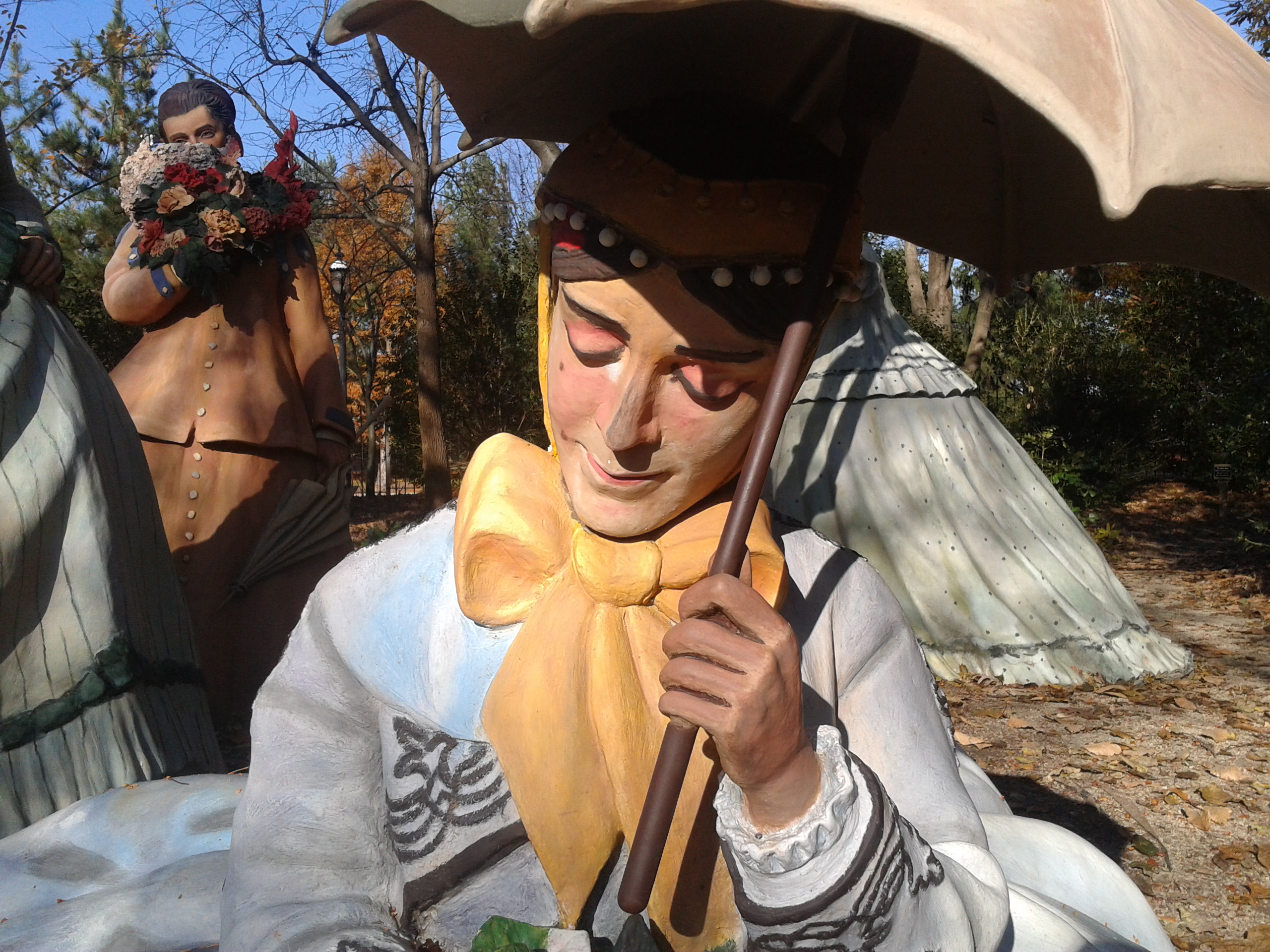
Having taken the NJ Transit from Hamilton station up to Newark and New York City several times, I’ve always been fascinated by the larger-than-life sculptures surrounding the area. From the mariachi singers that welcome visitors at the train station parking lot, to the couple pointing up at the large tooth across the street, and the odd, scaled-looking horse and rider that can been seen from the transit train window on rides to Trenton, I’ve always had curious fantasies about the Hamilton area and it’s weird monuments.

Apparently, the source of the sculptures is no real mystery. The source is that they come from Hamilton’s Grounds for Sculpture, a initiative beginning in 1992 designed to promote greater appreciation of sculpture as art. The park’s 42 acres are dotted with various sculptures and other works of contemporary art, including my favorite: a series of diorama’s themed around Dante’s Inferno by Robert Taplin.

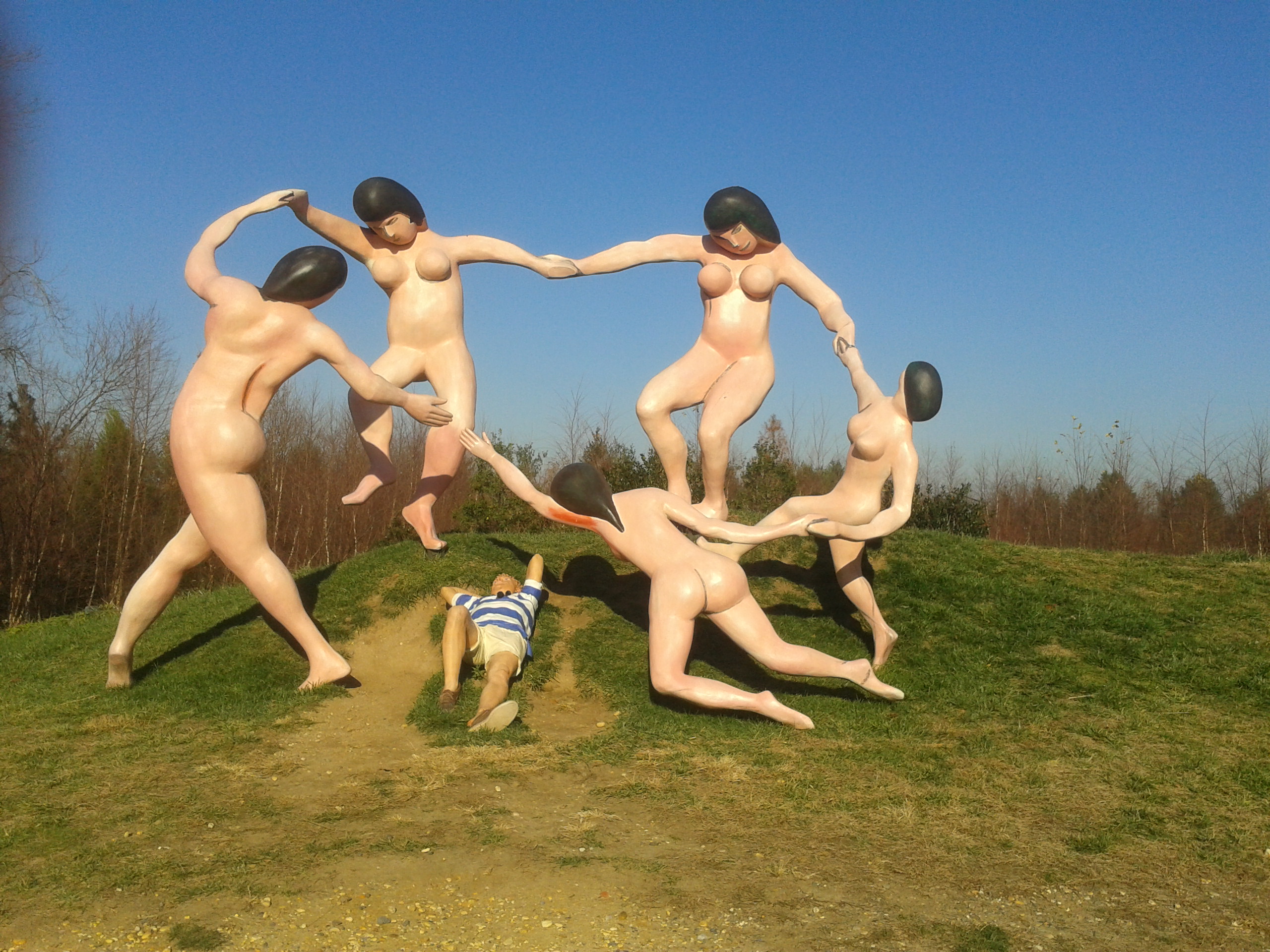
the meadow is home to some of the grounds’ more bizarre sculpture

Sculptures in the park cover a wide variety of themes and aesthetics. A newer area called “The Meadow” contains mostly darker, most bizarre sculptures while outdoor ones tend to focus on the more traditional; people, and places. Aside from sculptures, there’s also a decent cafe on the grounds, as well as a more expensive, high-class restaurant. This makes Grounds for Sculpture the perfect place for a date or day out, but also a potential destination for school trips. After all, the goal of the grounds is to promote education of the arts.

as a park plaque warns, some of the, more mature art may “challenge” younger visitors

Many of the sculptures are fascinating. A few are baffling. But all are, at least, interesting. All in all, Grounds for Sculpture is a great place to take a break and appreciate art, and maybe even muster up a little of your own creative inspiration. I came away from the grounds with not only a deeper appreciation of outdoor sculpture, but also with a wish that there were more places like it around. Art often comes under attack by narrow-minded people, but when we take the time to appreciate art in a comfortable and relaxing setting, we often find that we’re all capable of appreciating it.

The Hobbit OST: Old Wizards Can Learn New Spells!

The magic strains of Howard Shore’s The Lord of the Rings trilogy soundtrack remain some of the most enduring ever, right up there with Star Wars and The Godfather in terms of recognition and enduring value. It’s hard to listen to Shore’s Shire theme, or Rohan’s war anthem, or Enya’s “May it Be“, and not immediately be transported back to the mythic realm of Middle Earth and its various, larger-than-life locales.  

After viewing the first two The Hobbit trailers, I was a little bit concerned. So much of Howard Shore’s music sounded new, without so much in common with Shore’s LotR masterpiece. Fortunately, the new Hobbit soundtrack dispels all doubts quicker than Gandalf’s exorcist of Saruman-possessed Theoden King. While The Hobbit OST contains the appropriate amount of references to the previous trilogy, Shore flawlessly weaves in a number of new and interesting themes which, I suspect, will become just as enduring as their LotR counterparts. Among the highlights are Richard Armitage’s drawven “Misty Mountains” dirge, based on Tolkien’s own poem bound to become the central theme of the series. Listen to the soundtrack yourself by clicking on the image below:


Election Night Facebook Musings

“Facebook wants YOU to vote in tonight’s election!”

As election night draws on, I’m sitting on my laptop. I flick back and forth between MSNBC and CNN while refreshing RealClearPolitics every five minutes. I’m waiting for 11 pm, when Stewart and Colbert begin their hilarious annual coverage. In the meantime, I’m browsing Facebook, too. Hurrah for multitasking.

Facebook on election night is exactly what you’d imagine it to be. One out of every three statuses to reach my newsfeed is something about the election. Out of these election statuses, a considerable number of them can be filed into the category of smarmy, sarcastic mockery; statuses like “insert political opinion here” and “UGH, I’m tired of hearing about election crap on Facebook!”

Statuses of that variety are interesting to me, because it seems like every time something is trending on Facebook or Twitter, there’s someone out there who wants to make sure you know that they don’t care. This doesn’t just happen on election night; this happens before hurricanes, and when breaking news comes out, and even over the holidays. And, this begs the question: if someone really doesn’t give a damn about what Facebook is talking about, and is even annoyed about what they’re seeing on their Facebook newsfeeds, then why is that person still spending so much time hanging out on Facebook?

I’m thinking the internet, and Facebook, is like some kind of addictive substance. When I’m annoyed by something in real life, I have no problem keeping quiet and removing myself from the situation. But, that seems harder to do on Facebook, or anywhere online. That might be because the internet makes people courageous: when physical confrontation is taken out of the equation, it’s easy for anyone to suddenly become a loudmouth. It might also be because of the nature of Facebook and the internet itself. The internet is a place for clicking things, opening new taps and refreshing old ones. When I boot up Chrome, I automatically open up several tabs to accommodate my favorite sites. It’s automatic, formed gradually by habit.

Maybe it’s also because Facebook and other internet discussion mediums have become such a major arena of discussion in our personal lives. I vent on Facebook. I make plans on it, too. I know people who’ve began and ended their relationships using Facebook. I know lots of people who don’t know what’d they’d do if there was no Facebook. And, just about everyone I know is stuck on Facebook, for better or worse, despite concerns over their own internet habits and  reservations about the company’s stance on user privacy. We just can’t remove ourselves from Facebook, and we can’t imagine a world where Facebook removes itself from us. We’re stuck with it.

Kinda like we’re stuck with the two party system…

Cloud Atlas

Cloud Atlas is a movie unparalleled in scope. Wowing you in ways that only a premier Wachowski brothers film can, I suspect that Cloud Atlas would already be hailed as an instant classic were it not for the demanding length and intellectual difficulty of the film.

I’m not going to go too much into how Cloud Atlas has blazed new trails in cinema; the project was unquestionable in its ambition, and, like Peter Jackson’s Lord of the Rings trilogy, proves once again that film can be a proper medium to tell the types of stories that critics are always claiming to be impossible; others have written extensively about that. I’m not gonna bother answering valid criticisms about how some of the movie’s various story lines would be bland on their own; that’s beyond the point of the entire movie.

Really, I just want to say that, while Cloud Atlas is a science-fiction movie, detective story, fantasy novel, romance, comedy, and drama rolled up into one, its focus is pretty straightforward: it’s a movie about what makes movies good–being, a story where compelling, human characters are forced to rise above various obstacles and societal barriers. In a way, Cloud Atlas is a movie about why we like movies. And, if you like movies, you deserve to at least give something as ambitious as Cloud Atlas a honest try.

Oh, and Tom Hanks and Halle Berry are great, as is the rest of the cast. I definitely have got to start talking like those “After the Fall” people.

Why you don’t need to read Patrick Rothfuss- The Name of the Wind

A little while ago, I finally finished Patrick Rothuss’ The Name of the Wind, after giving it a second chance. My second attempt, though much more enjoyable than my first (I actually finished with it, instead of just getting 10 percent through), still urged me to immediately post the following blurb on Amazon from my Kindle:

Narrated in the first person by Kvothe (pronounced quothe), The Name of the Wind is a smug, self-congratulatory account of how a self-righteous brat manages to get his way again and again thanks to luck and Rothfuss’s half-convincing displays of his main character’s cleverness. Mostly good prose and background story earns this novel two stars, but Rothfuss’s setting would be much better not see through the lens of Kvothe’s narration, which is like listening to a compulsive liar try and make up for obvious self-esteem issues.

In all honesty, though, it’s a wonder that the novel isn’t worse than it is; it breaks all the unwritten rules of writing a good story. The story, at first, is told in the third-person present, but soon the action devolves into long stretches of past-tense narration, in the form of protagonist Kvothe telling his story to a chronicler named… Chronicler. Kvothe is arrogant and self-absorbed, and neither he nor any of the other characters display any relevant level of personal growth or development, which is a real shame considering the various trials they go through together.

The Name of the Wind is often described as a novel for Harry Potter fans wanting more. While I’m not huge HP fan, I couldn’t help but find some irony in the fact that this novel made me want to return to Hogwarts. The best parts are, without a doubt, when Kvothe is living at the magic University, getting along with his various peers. But even Rowling approaches her own characters with more of a critical eye. Harry becomes a whiny jerk by his teens, but Rowling, unlike Rothfuss, never gives you the impression that Harry’s commendable for being so. Kvothe, in contrast, loves victimizing himself, even when the trouble he gets himself in is well-deserved and long overdue. And Rothfuss expects you to feel good about it, when Kvothe’s cleverness grants him another free pass.

Lots of people like The Name of the Wind.  Lots of people also like the idea that they’re always right, and the other guys is always wrong, and any bad things that happen are obviously someone else’s fault.