Playing Shin Megami Tensei: IV

I’ve long been a fan of the Shin Megami Tensei: Persona series, but it wasn’t until recently that I decided to give the mainline games of the series a try. I picked up IV on the 3DS first, finished it, and moved promptly on to the first game (on iOS) and Nocturne for PS2. Ah, Nocturne. Finally, I’m playing the game that will allow me, once and for all, to shed my “casualness”.

protagonist-shin-megami-tensei-iv
Shin Megami Tensei IV 
was a fascinating, but flawed, experience. The game has a dark post-apocalyptic atmosphere, with creepy synthesizer music and a misanthropic plot. You take the role of a Samuri from a vaguely Christian Kingdom who, along with a few companions, descends upon the remnants of a demon-infested Tokyo through hidden tunnels (Tokyo being destroyed is a main theme that seems to occur in most mainline SMT games). Along the way, you encounter various demons who you can fight, bribe for money, or coerce into joining your ranks.

The mechanics work, and there’s always an element of strategy and luck to every battle. You don’t have to grind levels in SMT IV, but you do have to pay attention to every fight. Just spamming the “attack” button will get you to the game over screen very quickly.

While SMT IV is a ton of fun, it is a bit lacking in plot and character development. As the game progresses, it becomes clear that your companions aren’t really real people as much as they are paragons of certain ideologies. One of your companions is a privileged richboy who hates demons and represents the “law” side of the spectrum. Another of your companions comes from the poorer classes, and thinks Tokyo’s chaotic landscape isn’t so bad. Often, you’ll have to settle disputes between the two, moving the plot along in a specific direction that culminates (predictably) in a showdown between your party and the ultimate good or evil.

That may not be the most original concept, but SMT IV sure is nuanced about it. Whether you choose to align with angels or demons, the game is quick to remind you that your choice might not necessarily be the right one. At one point in the game, you’re cast into a hell of your own doing, a realm made up of the culmination of your own choices (and, trust me, it’s bad no matter who you choose to side with). There’s also a neutral path you can walk, which is probably the most rewarding but also the trickiest to obtain, though somehow I managed it on my first try (without even using a guide).

As it stands, SMT IV is a flawed gem. It’s not the godsend to JRPGs that Persona 3 was, but in an era where most JRPG games are of the cutesy kiddie variety, it stands alone, boasting a mature narrative and very little BS.

Thoughts on Nocturne will be posted in a few weeks.

One Feeling At A Time – Björk’s Vulnicura

Bjork-Vulnicura1

I wasn’t even halfway done listening to Vulnicura before I decided it was the best Björk album in several years. Now that I’ve listened to it a few more times, I have to reconsider: it might be the best Björk album there has ever been.

Björk’s music has always been interesting and, at the very least, ambitious. As she’s developed as an artist, Björk has gained a reputation for creating albums that are highly dense and experimental, and even as I listen to Vulnicura I feel like I’m experiencing a modern Classical piece – a sort of marriage between, say, Tori Amos and Phillip Glass. But over the last few years, Björk has also earned a reputation for creating music that is more abstract than personal; too dense, and leaving many unable to connect.

It doesn’t get more personal for Björk than Vulnicura. Crafted from the embers of her failing relationship with her longterm partner, Vulnicura is something like Björk’s Blood on the Tracks: Sentimental and nostalgic, visceral and misanthropic, and expressing all manners of reflection knowable to those who’ve loved and lost.  It doesn’t get further from Biophilia than this.

I Think Lupe Fiasco Just Released His Best Album

Lupe_Fiasco_Tetsuo_&_Youth

It’s tough to get a good handle on Lupe Fiasco. Ever since his debut, Food & Liquor, Lupe has been an artist that dishes out excitement and disappointment in nearly equal doses. Albums like The Cool were ambitious and reached for admirably high themes, but failed to deliver on the level of some of rap’s greater concept albums. Other releases, like Lasers, went for a more mainstream and accessible sound without gaining much momentum (Although who can say they don’t like “The Show Goes On”?).

Tetsuo & Youth seems to be where Lupe has finally put it all together. Lupe is undeniably Lupe – with the typical references to social activism, nerd culture, Islam. But here, unlike any time before, Lupe has dropped the sledgehammer pretension without  skimping on edginess and intellectual content. Instead, what Tetsuo & Youth offers is something far more raw, something that cuts straight to the bone. This album is a real portrait of an artist who, after 5 albums, is finally putting all of the pieces together and finding their true voice. It’s awesome. One can hope that this is just the beginning of a new chapter in Lupe’s career.

2014 Review

This year, I started a number of self-improvement projects. With major events like grad school, finding a job, and getting married out of the way, I found that I once again had time to my various hobbies. I started listening to more music; I began actually recording my own music. I started studying Chinese again, and learned new techniques for playing guitar. I began to pay attention to my diet, and joined a gym. Perhaps more than anything, I caught up on TV shows and finished several video games.

It’s been a pretty good year: not too exciting, but not very boring either. Going into next year, I would like spend a little bit less time in front of the TV, and more time on music and language. I would also like to revive this blog.

Somewhere, the purpose of the Tingle Review was lost. Initially, I saw the Review as a purveyor of how I experience culture.  As time went on, however, it diminished to this sparse wasteland of lists. I’m hoping to change that in 2015.

Here are a few books, games, and albums that gave me inspiration that I’ll carry into whatever I do next year:

Book – The Bone Clocks by David Mitchell

I’ve read a few of Mitchell’s books in the past. This one wasn’t my favorite, but I still really enjoyed the way this book seamlessly wove several different points of view and unique plots around the common thread provided by the main character. Maybe this has been done before and I have simply never read another book like it. Regardless, I found Mitchell’s style to be refreshing, and clever. Increasingly complex worlds and characters are built in a way that feels completely organic.

Book – Colorless Tsukuru Tazaki and His Years of Pilgrimage by Haruki Murakami

Unfortunately, I haven’t read many of Murakami’s books. This one was great, though. This book perfectly captures the feeling of being isolated by friends, as well as being vindicated by the discovery of new friends.  The loneliness Tazaki experiences is inherent in human relationships, even successful ones.

Music – Casualties of Cool by Casualties of Cool

Devin Townsend really outdid himself with this collaboration. Having delved more into acoustic music and ambient music lately, this album came out of the woodwork and knocked me flat with its genre defying style. I know for sure that Townsend’s empty, ambient folk is going to be a huge influence on any music I make on my own.

Game – Mario Kart 8

If for nothing else, for at least reminding me that games can be simple games and still just as fun as the big-budget interactive movies you see on the other next gen consoles.

Best New Music – Apr – Jul 2014

I’ll admit – I’ve been slacking. Still been listening to quite a bit of music this summer, so it’s time for an update.

BADBADNOTGOOD – III (Jazz/Instrumental/Hip Hop)

Featuring a multitude of jazzy hip hop beats that sometimes sound like videogame soundtracks (artsy videogame soundtracks), III is one of the tightest instrumental records of the year. Always compelling and never pretentious, BADBADNOTGOOD have crafted a well-together album that expands the mind while moving the body.

Kishi Bashi – Lighght (Pop/Electronic)

The electric violinist of Of Montreal returns with a second solo album full of catchy hooks and trippy melodies. The end result is something like Electric Light Orchestra, with a little bit more poetry and a little less prog. Lighght is a big improvement over the solid solo debut.

Kyary Pamyu Pamyu – Pika Pika Fantajin (Pop/Electronic)

Kyary Pamyu Pamyu’s newest record is the musical version of a kid shotgunning pixie sticks. It’s childish, cute, addictive, and probably not very good in the long term, but did I mention how cute it is? Pika Pika Fantajin is an overwhelmingly fun album. It sticks to you and grows, and with repeat listens reminds you of all those great previous listens.

March Music Picks

This month wasn’t great for music, especially compared to the awesome new releases from Beck, Marissa Nadler, Sun Kil Moon and Nicole Atkins in February. But I still found myself enjoying a few records.

Animals as Leaders – The Joy of Motion (Instrumental; Fusion; Metal)

The_Joy_Of_Motion2014

Until recently, Animals as Leaders were a band that fell through the cracks for me. Having heard more than my fill of generic instrumental progressive metal over the years, I was reluctant to try out another band that might blast me with djenty tones and sci-fi levels of virtuosity. Man, was I wrong. Animals as Leaders aren’t prog metal as much as they are a tasty blend of fusion that combines energy with atmosphere and technique. Tosin Abasi is quick becoming one of my favorite electric guitar players.

Hozier – From Eden EP (Singer-songwriter; Folk)

CS2428829-02A-BIG

None of the songs on “From Eden” are as good as “Take Me To Church” on last year’s phenomenal EP of the selfsame title. But this release still displays Hozier’s uniqueness in lyricism and phrasing that should make for an awesome Hozier album in the future. Both EPs are brimming with potential, but I’m still waiting in anticipation for the eventual full-length from the Irish bard. In some ways, Hozier feels to me like a male counterpart to Florence – with a voice that can haunt or uplift in equal proportions.

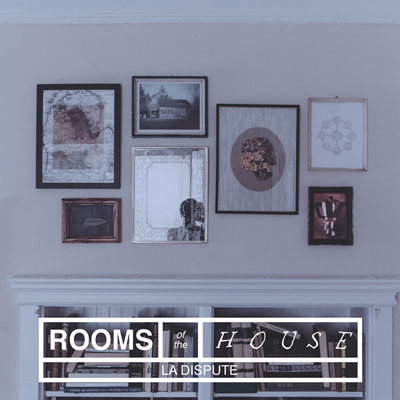
La Dispute – Rooms of the House (Spoken Word Hardcore)

Rooms_of_the_House

-Core music has never really been a favorite genre of me, but I found something alluring about the jagged stream-of-consciousness delivery on “Rooms of the House”. The album is tight instrumentally too, but really it’s the words that paint all the pictures – if you can get over the monotone and follow along.

* * *

Well, that’s it for this month. I was hoping there’d be more, but like I said above, this month was weak. Plus, I’ve been doing a lot less desk work, so I’ve been listening to less music overall. Next month looks to be pretty promising, with new releases from Nickel Creek, Cloud Nothings, Devin Townsend, and Manchester Orchestra.

February, Month of Folk

February’s a short month, but thankfully a ton of great music has come out, especially if you like folkie or singer-songwriter stuff. Here are a couple of albums I’ve been digging for the month of February.

Image

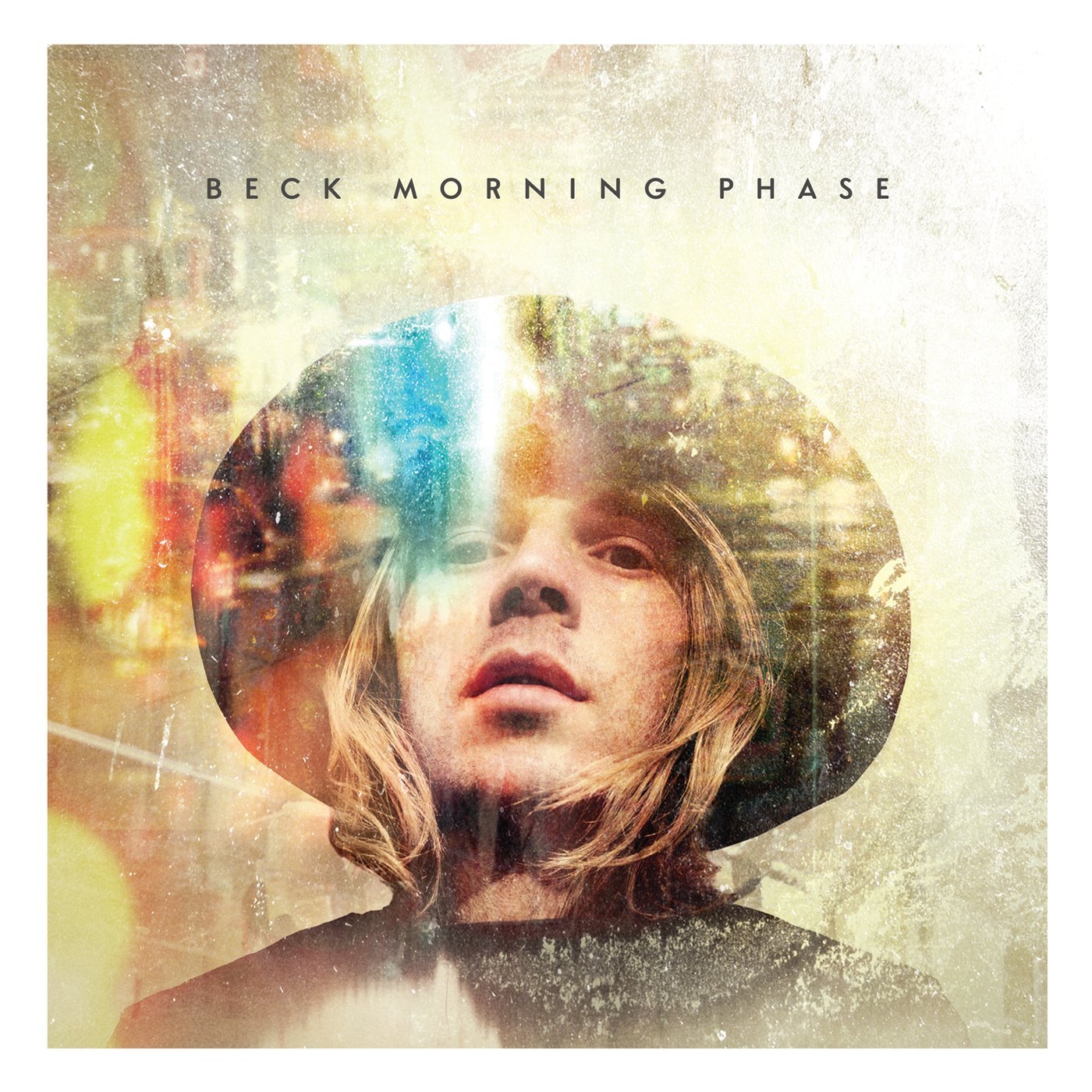
Beck – Morning Phase

I’ve never listened to much Beck, but “Morning Phase” is going to make me a fan and send me back scrounging through the latter discography. “Morning Phase” is a lush, emotive album that combines downtempo strumming and folkie dreampop vocals with lyrics that express hopefulness for new beginnings. It’s a compact and solid album, but lush and diverse enough to earn repeated, ever-rewarding listens.

Image

Marissa Nadler – July

Marissa Nadler’s “July” continues her trend of  folk records that combine eeriness with American fingerstyle guitar patterns. The album is somber, as Nadler delivers lines like “You’ve slept through the day, the night and the day/you’re never coming back” and “There’s nothing in my heart”. Under it all is Randall Dunn’s production, usually reserved for extreme metal acts like Wolves in the Throne Room, but here mostly lending ambiance to Nadler’s gothic expressions.

Image

Nicole Atkins – Slow Phaser

The lastest record from songwriter Nicole Atkins is a quick, bohemian statement that, at times, sounds like Sufjan Stevens; at other times, Deep Purple; and sometimes, like a spy movie soundtrack. Atkins’ husky voice and down-to-earth lyrics triumph over all, however, asserting the full command the artist has over her material. More like a quick burst of eclecticism than a “slow phaser”, Atkins’ record is bite-sized and tasteful, but still dangerous.

Image

Sun Kil Moon – Benji

Mark Kozelek’s unabashedly honest lyrics have deterred a few reviewers, but they also drive the confessional, no BS style that makes “Benji” unique.  The album’s droning fingerstyle patterns accompany vivid, often brutal images of loss and anger, but there are plenty of soft and reflective moments too. “I Saw the Film the Song Remains the Same” is a particular highlight which exemplifies Sun Kil Moon’s unique brew.

January Music Picks

The new year started off slow, but by the end of them month I already found myself behind on a ton a new great music to listen to. Here are some of my favorites:

Alcest – Shelter (Shoegaze; Black Metal derivative)

Alcest have veered away from their trademark blackgaze style, and moved 100 percent into the realm of pure shoegazing music. While the music is atmospheric and dreamy, and there is a greater diversity of soothing shimmery sounds than ever, I would be lying if I said that I didn’t miss the light/dark dichotomy of previous records. However, Shelter still reaches melodic and emotional heights that are as heart wrenching as can be, and while the black metal elements are missed, I can’t fault the artist for moving in a new direction.

Cities Aviv – Come to Life (Hip Hop; Cloud Rap)

Gavin May’s unique beats and production defy genre. Voices are old school, atonal, gritty, but most of all, exuding confidence. Rhymes rely more on philosophical content than pure word play, but really percussive instrumentals are what drives that songs home. “Come to Life” sounds raw and harsh at times, and isn’t for everyone, but to its credit it is never, ever boring.

Sithu Aye – Invent the Universe (Progressive Metal)

Sithu’s sense of melody continues to be astounding – but over time, he’s made solid improvements to his tone, production sense, and chops as a songwriter. Pristine guitar tones, tasteful solos, intriguing rhythms, and glorious melodies scatter through “Pulse”, making the short EP his strongest and most concise work to date.

Transatlantic – Kaleidoscope (Retroprog)

Crisp instrumentation and a punchy, one-of-a-kind rhythm section make Transatlantic one of my favorite bands to listen to. This time around, songs feel more like genuine collaborations rather than simple Neal Morse epics which some additional arrangements. Ultimately, “Kaleidoscope” is a ton of fun, and it’s not all that often you see such a talented group of people come together to make music so pristine and glittering that it can take weeks to wash off.

Warpaint – Warpaint (Indie; Dream Pop)

If Dream Pop, as a genre, offers swooning soundscapes, Warpaint offer an echo of a trance murmur heard from the opposite end of a dark tunnel. I think I like it. The vocals are lethargic but ghastly, with lyrics too loaded to be considered mundane. Instrumentals emote, giving plenty of reverb-washed sonic space to the trio’s endeavor. There are times, though, where the production clips. A softer mix would have helped keep the brooding magic of the album in the bottle, and it’s a shame the record was mixed so loud.

Year of Our Lord, 2013 – Favorite Albums

So much new music, so much time commuting to listen to it all.

Here were my favorite albums in 2013.

  1. Olafur Arnalds – For Now I Am Winter
  2. Laura Marling – Once I Was an Eagle
  3. Protest the Hero – Volition
  4. Laura Stevenson and The Cans – The Wheel
  5. Levin, Minneman, Rudess – Self-titled
  6. Vampire Weekend – Modern Vampies of the City
  7. Boards of Canada – Tomorrow’s Harvest
  8. Steven Wilson – The Raven That Refused To Sing (And Other Stories…)
  9. Sigur Ros – Kveikur
  10. Vali – Skolslandskap
  11. Blackfield – IV
  12. Chrvches – The Bones of What You Believe
  13. Volcano Choir – Repave
  14. Bob Dylan – Another Self Portrait
  15. The Dear Hunter – Migrant
  16. Scale the Summit – The Migration
  17. Haim – Days are Gone
  18. Deafhaven – Sunbather
  19. Ulver – Messe X.I – X.VI
  20. Chance the Rapper – Acid Rap

Honorable Mentions –

  1. Cloudkicker – Subsume
  2. Tyr – Valkrya
  3. Devranda Banhart – Mala
  4. Junip – Junip
  5. Laura Veirs – Warp and Weft

Bargain Games You Shouldn’t Miss – The Last Story

While the Video Games generally make a pretty expensive hobby, we are now arriving at an economically-friendly period for for gamers. The next generation is on the horizon, and will be here by the holidays. Meanwhile, the current generation is ending, and its games are dropping in price. Now is a rare time, when you can buy a plethora of games which are both inexpensive and relatively recent.

Over the next few months, I’ll be finding whatever time I can to play catch-up ; not on the big name games everyone knows, but on some of the sleeper titles that may have gone unnoticed, and shouldn’t be missed before the next generation arrives.

1st Recommendation: The Last Story

Image

The Last Story is a pretty interesting game. It falls in beside other Japanese Role Playing Games like Lost Odyssey and Blue Dragon in the category of RPGs that are more “Final Fantasy” than the thirteenth installment of the series — but not necessarily better all the same. In the case of TLS, it’s no secret that the game lacks polish.

Uematsu’s soundtrack is lush, and old-school FF director Sakaguchi throws in the kitchen sink: every FF trope and twist seems represented here, with no regard for avoiding cliches. There’s even some new “gotta have” elements thrown in, like a “first person” mode which both aspires to and lacks relevance in equal proportions.

While the game provides a wealth of ideas and puts the player in a myriad of situations,  it also lacks consistency, even in the literal sense. The graphics are detailed, almost too much for the Wii, and most levels and towns look like blurry palates of gray. The framerate is awful, too, and ebbing and flowing at various rates.

That, however, is the worst of it. Combat feels gimmicky at first, but is fun if not a bit extravagant. The story and its characters are also surprisingly engaging, if not on their own merit at least in some nostalgic way. And despite technical hurdles and some editorial fluff, The Last Story is just an all-around heartwarming game for fans of the genre. It succeeds where recent bigger names – Star Ocean, Final Fantasy, etc. – have failed completely, in that, for all its flaws, its story and characters manage to engage the player. 

After getting past several shortcomings early on, I found that The Last Story was  succeeding at pulling me in. The game was reaching me, in that rare way that only the RPGs of the SNES and PSOne era really do. It might fly over the heads of modern gamers, but TLS is a rarity, and no-doubt a rough gem that shouldn’t be missed by people who appreciate the RPG genre.

You should be able to pick it up for $20-30 dollars. That’s a great price, and you’ll be getting a ton of game for it.