Dream Theater’s New Self-Titled Album

image source: bravewords


Considering I spent nearly four years of my life listening exclusively to this band and their circle of peers and influences, it’d be a shame if I didn’t write at least a little bit about them, now that they have a self-titled record out. I’m not blown away by the new Dream Theater album, but it’s a very strong late-career outing for a band that have been incredibly productive over the course of their career.

The album can be streamed here: http://www.rollingstone.com/music/news/dream-theater-channel-prog-metal-in-dream-theater-premiere-20130916

And, here’s my track-by-track:

False Awakening Suite: A short piece that has interesting moments but fails to gain much momentum and suffers from a lack of fluidity. It seems to lack purpose. Score: 2/5

The Enemy Inside: An exceptional instrumental section and JP/JR solo spot gives existential validity to this otherwise vanilla prog metal tune. Score: 3/5

The Looking Glass: Dream Theater play to their strengths here moreso than anywhere else on the album, infusing old-school progressive metal with their trademark instrumental craftmanship and LaBrie’s Arena Rock knack for melody. Score: 5/5

Enigma Machine: It’s not as bad as “Raw Dog”, but it lacks direction and fails to mesmerize despite showcasing virtuosity. It might be a lot more fun to watch live. Score: 2/5

The Bigger Picture: This dynamic and powerful song spirals out of control after the first chorus, but that instrumental build-up into the finale puts everything back into perspective. Score: 4/5

Behind the Veil: Parts of good and bad songs are jarbled together without much regard for fluidity.  JP’s solo almost saves the song, but we’ve seen that trick too many times before. Score: 2/5

Surrender to Reason: The Rush influences on this album are starting to feel blatant. Dream Theater are obviously lifelong disciples, but even they should know how to avoid those awful 70’s Rush transitions by now. Score: 2/5

Along for the Ride: A solid effort that sits well beside songs like “Wither” and “This is the Life”. Score: 3/5

Illumination Theory: For every fantastic section of this 22 minute song, there is section that feels like a mere formality – including & especially Rush homages. I love the orchestrated section, and the piano/guitar fadeout at the very end. Can we have more of that? Score: 3/5

In sum, things seem looser in DT world this time around. DT12 is a mixed bag that continues to demonstrate that band’s excellent musicianship and creativity, but homages to the band’s influences are too prominent, and the songcrafting is more concise but nowhere near as seamless as on A Dramatic Turn of EventsOverall: 6.5/10

Holy Smoke: 6 Iron Maiden Songs for the Catholic Conclave

If the conclave of Catholic Cardinals is leaving you a little bit cold, you’re not alone. Here are six Iron Maiden tunes to lighten the atmosphere.


1.      “The Number of the Beast” from The Number of the Beast (1982)

Here’s the song that started it all. Even though “The Number of the Beast” wasn’t actually promoting evil, the religious right didn’t care and launched a campaign against it anyway, which really just amounted in lots of free press for Iron Maiden. While “The Number of the Beast” isn’t Iron Maiden’s first song or biggest hit, it’s the song that made Maiden a household name.


2.      “Heaven Can Wait” from Somewhere in Time (1986)

“Heaven can wait for another day”: That’s a sentiment apparently not only expressed by Iron Maiden bassist Steve Harris, but also a handful of corrupted and greedy Vatican insiders. Hopefully, the conclave and new Pope won’t allow reforming the Church to wait much longer!


3.      “Only the Good Die Young” from Seventh Son of a Seventh Son (1988)

The title of Billy Joel’s “not anti-Catholic, but pro-lust” song gets turned on its head here, in Iron Maiden’s indeed anti-Catholic (but also anti-lust) album closer. The song follows The Clairvoyant, a character from the Seventh Son pseudo-concept album, as he expresses frustrations with a hyprocritical religious hierarchy consumed by lust and other deadly sins.


4.      “Holy Smoke” from No Prayer for the Dying (1990)

Like “Only the Good Die Young”, “Holy Smoke” is another song poking fun at Church hypocrisy, though this time from the tongue-in-cheek viewpoint of Jesus: “Lot of my friends making me a joke/ mixed up my words like I never spoke!”, or something like that. Hey! Bruce is singing in a flowerbed!


5.      “From Here to Eternity” from Fear of the Dark (1992)

A pretty straightforward song about giving into sinful temptations, kinda like “Heaven Can Wait”, but much more shallow. This time, there’s gang vocals, too—had Maiden gone glam? “Hell! Ain’t a bad place. Hell is from here to eternity!”


6.      “Judas Be My Guide” from Fear of the Dark (1992)

Maybe one of Maiden’s most underrated songs ever, and definitely one of their most misanthropic. How does one live in a world full of darkness, where everything is for sale and nothing is sacred? Who can one turn to in this Ayn Randian dystopia? Judas, my guide!


Bonus Tracks

If there’s no “holy smoke” by the end of the day, you might need a few more songs to get you through. Here’s a couple more from beyond Maiden’s “classic” era:

 1.      “The Sign of the Cross” from The X Factor (1995)

Most Iron Maiden fans consider the Blaze Bayley era to be a bit plodding and dull, but “The Sign of the Cross” still gets a little love now and then for its haunting, gothic atmosphere. I’m not sure what this song is about. Is it a genuine call for absolution, or another dark and twisted parody of the Vatican’s shadowy inner machinations? Or is it about “The Name of the Rose”? (The movie version, not the book, obviously).

2.      “Montsegur” from Dance of Death (2003)

Only Iron Maiden can make medieval persecution of Gnosticism rock this hard. “As we kill them all so that God knows his own/ the innocents died for the Pope on his throne”, etc, etc. Anyway, great song. Definitely still gets the blood boiling over crimes against humanity committed eons ago.

That’s all for now! I’m sure there are even more Maiden songs that’d be great for the conclave, so feel free to post them in the comments.

2012: Top 10 Albums

The 2012 musical year has now come to a virtual close. In the past I’ve done both write-ups and boring old lists; this year will be a combo: lists with short blurbs. I hope that you like it, and that my list perhaps persuades you, reader, to listen to something you might not have otherwise. Likewise, I’m looking forward to any lists of my friends that get created.

10. Cloudkicker- Fade:  Not better than Beacons, but it still manages to capture some of that atmospheric wall-of-sound, and is a welcome return from the new direction introduced by Let Yourself Be Huge.

9. Sithu Aye- Invent the Universe: Really solid, melodic instrumental progressive metal (aka “djent”).  Sithu’s got an ear for melody and build-up that lots of his peers just lack.  I’m looking forward to future releases, and hopefully they’ll have better sound production, too.

8. Flyleaf- New Horizons: Considering this is the last record with their vocalist, maybe “New Horizons” would have been a better title for their next record.  Still, Flyleaf managed to recapture their unique combo of melody and aggression.  New Horizons features some incredibly catchy songs, as well as an awesome retooling of an old fan favorite.

7. Alcest- Voyages de L’ame: A very good, atmospheric album that feels tedious at times. While enjoyable, this is probably the last “shoegaze” black metal album Alcest can do before the formula starts feeling too repetitive.

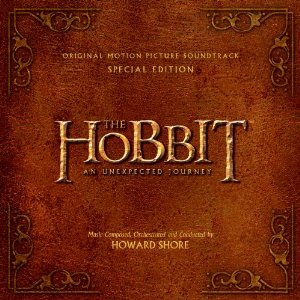
6. Howard Shore- The Hobbit: An Unexpected Journey OST: Unlike many other parts of the Hobbit film, HowardShore’s score is every bit as epic as the original trilogy’s, and features both memorable themes and newer ones that are every bit as good.  Thorin’s pensive medieval soundscape and Gandalf’s new, more eccentric theme are brilliant; so are the hints of cacophony that hover over the movements leading us towards Smaug.  Shore’s ability to weave heroic themes with chaos is what confirms him—and not Williams or Zimmer or others who always get suggested— as the right composer for scoring Middle-earth.

5. Storm Corrosion- Storm Corrosion: Atmospheric music that is haunting and dark, and every bit as good as Steven Wilson’s Grace for Drowning and Opeth’s Heritage. If this is what Wilson/Adkerfelt is like, I hope this won’t be their only collaboration.

4. Wintersun- Time I: I actually haven’t heard Wintersun before, so I didn’t have any real hopes or expectations going into picking up Time I. I was not, however, disappointed and, needless to say, nor was anyone else. Time I is epic, atmospheric black metal that has a energizing power metal vibe throughout while never sounding too bombastic. Although a shorter work (essentially three longish songs with two instrumental movements sandwiched between), it has gotten no shortage of playtime from my CD player.

3. Katatonia- Dead End Kings: A much more diverse and rewarding album than their last effort, Dead End Kings features both faster songs and more downtrodden, lyrical Katatonia trademarks. “Lethean” might be their best live song.  Looking forward to more as I slowly make my way through Katatonia’s back discography.

2. Anathema- Weather Systems: Unlike Anathema’s last album, Weather Systems is more like a song-cycle chock full of recurring motifs and melodic hooks.  Weather Systems also distances itself creatively from Steven Wilson enough to cover more than two emotions (sad, and weird).

1. Sigur Rós- Valtari: My favorite album of the year, from what I consider to be the most truly “musical” band around. Valtari offers SR’s trademark combo of post-rock and world music, and is  emotionally and thematically consistency throughout. Some fans were disappointed, but I think Valtari has gotten better with every listen.  As reflected by its fuzzy, obfuscating creative direction, you need time and patience before you can truly know Valtari, and in turn learn to love it.


Dylan, Knopfler Perform for True Believers

Image

(image cred: http://3.bp.blogspot.com)

It’s 9:30 pm Monday night, and Dylan has just taken the stage at Wells Fargo, accompanied by the cacophonous warm-up of his band. Moments earlier Mark Knopfler had encored, offering perhaps his only appeal to the greatest hits crowd in his set for evening. The tone for the night had been set: this was to be a show for true fans and diehards, not for casual fans and listeners desiring a nostalgic experience.

For most of the set, Mark Knopfler played to the aficionado, favoring deep tracks and solo material to radio smashes. Dylan snarled material from all five decades of music, from the appropriate opener of “You Ain’t Going Nowhere”  to the always-venerable closer, “Blowing in the Wind”. Whereas Knopfler’s band was always together and aurally well-supplemented by an exemplary auxiliary section featuring a flutist, violinist, and accordionist, Dylan’s was more of a rag-tag crew; fitting, perhaps, considering the large number of selections from Dylan’s breakaway Highway 61 Revisited.

As Mark Knopfler unleashed a sonic storm of Celtic strains and proficient guitar flurries, he made it clear to audience hecklers early that he was not going to be playing “Money for Nothing”. Meanwhile, Dylan pounded on his piano, crooning and growling and snarling through favorites and obscure cuts alike, much to the surprise of some unseasoned audience members doubtless expecting to see their 60’s idol appear clad saintly in suede boots, dark shades with a harmonica around his neck, unworn by time and harsh reality.

Despite physical limitations, Dylan appeared genuinely well-spirited, especially on the harmonica and piano during extended jams and on special occasions, such as when he stepped away from the piano to deliver an absolutely stunning and terrible rendition of “Ballad of a Thin Man”. As Dylan’s set progressed, there were some who giggled through the performer’s crooning, while there were others who left early or stayed involuntarily, spending the rest of evening drinking $13 beers while browsing Facebook on their iPhones. But, by the final song of the evening, all but the true believers had filed out, and Dylan received a strong standing ovation from an arena of true believers.

Those who left the arena early ought to be disappointed with themselves for turning their backs on a legend. But, they probably would have been disappointed with Dylan anyway, even if the performance were given by a Dylan in prime health.

They probably wanted Dylan to sing something pretty for them.

The Hobbit OST: Old Wizards Can Learn New Spells!

The magic strains of Howard Shore’s The Lord of the Rings trilogy soundtrack remain some of the most enduring ever, right up there with Star Wars and The Godfather in terms of recognition and enduring value. It’s hard to listen to Shore’s Shire theme, or Rohan’s war anthem, or Enya’s “May it Be“, and not immediately be transported back to the mythic realm of Middle Earth and its various, larger-than-life locales.  

After viewing the first two The Hobbit trailers, I was a little bit concerned. So much of Howard Shore’s music sounded new, without so much in common with Shore’s LotR masterpiece. Fortunately, the new Hobbit soundtrack dispels all doubts quicker than Gandalf’s exorcist of Saruman-possessed Theoden King. While The Hobbit OST contains the appropriate amount of references to the previous trilogy, Shore flawlessly weaves in a number of new and interesting themes which, I suspect, will become just as enduring as their LotR counterparts. Among the highlights are Richard Armitage’s drawven “Misty Mountains” dirge, based on Tolkien’s own poem bound to become the central theme of the series. Listen to the soundtrack yourself by clicking on the image below:


Album Review: Flyleaf- New Horizon

New Horizons is definitive Flyleaf. From the frantic energy of the first track, “Fire Fire,” to the ballad-prayer finale of “Broken Wings”, a song which diehard fans might recognize from the band’s first EP, New Horizons stands amid the Flyleaf discography as perhaps the most diverse and deeply emotive record that the band have released thus far. And, though unfortunate, it’s oddly fitting that Flyleaf’s last record with Lacey Sturm also might be their best.

Like Flyleaf at their best, New Horizons covers a broad emotional and stylistic range. There are poppy songs,  like the vindicating “Cage on the Ground”, and hard rock ones, like “Green Heart” and “Freedom”, which remain melodically satisfying despite attaining status as some of the band’s heaviest and most aggressive music. And there are powerful anthems, like “Saving Grace” and “Stand”, doubtless future fan favorites from which the band ooze their glowing spirituality. Flyleaf are leaders on both Hard Rock/Metal and Christian Rock charts, and it’s no surprise: they cover a broad thematic spectrum, and do so genuinely.

All things considered, New Horizons might be a fitting name for Flyleaf’s third studio album. With lead vocalist Lacey Sturm stepping down a week before the album’s release date, it will be interesting to hear how the band develops around new vocalist Kristen May. Though lead singer changes can often be damning to a band, Flyleaf prove with New Horizons that they’re facing no shortage of musical creativity to guide them through their next era of music.


New Horizons

1. “Fire Fire” 3:03
2. “New Horizons” 3:09
3. “Call You Out” 2:22
4. “Cage on the Ground” 3:24
5. “Great Love” 3:42
6. “Bury Your Heart” 3:35
7. “Freedom” 3:20
8. “Saving Grace” 3:44
9. “Stand” 3:40
10. “Green Heart” 2:44
11. “Broken Wings” 3:34

Album Review: Sithu Aye- Inventing the Universe

In a sea of progressive metal and “djent” instrumental acts, Sithu Aye should raise some eyebrows with his newest release, Inventing the Universe. 

Unlike the title implies, Inventing the Universe doesn’t reinvent the genre, and is certainly not going to revolutionize progressive metal for a new generation. But Sithu Aye attains something that many cookie-cutter djent-by-numbers acts can’t: overall and overarching competence.

Invent the Universe is chock full of dazzling instrumental moments and catchy melodies. Electronic instrumentation, which almost seems to take a page from the rap book of beat-making, seams perfectly with Sithu Aye’s extraordinary guitar work.  Conceptually, the record moves from one track to the next with fluid consistency. This record has flow.

Is Sithu Aye the next Cloudkicker? Maybe, maybe not. But he’s just as good, and Inventing the Universe is certainly an indication that there may be much, much more coming from Sithu’s creative wellspring.

You can name your price and download Invent the Universe from Sithu’s bandcamp, here.

Tracklist:
1. Invent the Universe 01:27
2. Grand Unification (feat. David Maxim Micic) 05:00
3. Expansion 03:45
4. Baryogenesis 06:19
5. Particles Collide (feat. Plini) 05:40
6. Nucleosynthesis (Interlude) 01:36
7. Recombination 06:11
8. Dark Ages 06:43
9. Formation 04:38
10. Pale Blue Dot 04:48

Cynic- Portal Tapes

Cynic’s new (old) CD, “The Portal Tapes”, is my very first contribution to this brand-new blog. Disclaimer: while I love Cynic’s recent output, Traced in Air and Carbon-based Anatomy, I’ve barely listened to Focus (not really big on tech-death), which will probably invalidate everything I have to say about this album in the eyes of die-hard fans who just want to listen to Focus over and over again.

Calling The Portal Tapes a Cynic release is odd, because the material on this record was never meant for Cynic, but for Portal, a ditched side-project from1994-1995 that featured mainly members of Cynic and vocalist Aruna Abrams. On The Portal Tapes, Abrams’ voice dominates, which sets quite a different tone from most of Cynic’s other material. Aside from an overwhelming emphasis on female vocals, though, the material is not much different than what fans of Cynic’s latest efforts have become accustomed to. There is less “metal” and more experimentation. Synthesizers are used liberally, and there are more spaced-out atmospheric sections than heavy, technical ones. Some songs are even audacious enough to have been written in the major key, with sprinkled airy-piano throughout.

In addition, Chris Kringel’s fretless bass work on many songs really adds to the project’s individuality. On the lighter, Jazzier songs it really shines. While Traced in Air was a good album, it really seems stylistically regressive compared to the territory this project was blazing into circa ’94-’95.

The Portal Tapes might not work as an full-length album (even as it’s longer than most Cynic albums), but it is an interesting and rewarding look at a band that has always valued innovation, progressiveness, and self-discovery through music. After listening to The Portal Tapes, it’s become increasingly obvious to me that Cynic’s current musical direction is one that has been in the works for some time. Not everything on The Portal Tapes is good, but Portal were tapping into some potentially awesome styles of playing that were well ahead of their time, and I’m glad to see that Cynic, with releases like Carbon-Based Anatomy, are finally fulling that potential now.